Remember when writing a Product Requirements Document (PRD) meant staring at a blank screen for three days? That era is officially over. By May 2026, the landscape of product management has shifted dramatically. We are no longer just using Generative AI as a fancy autocomplete tool. Instead, we are entering the age of AI Pair PM, a workflow where autonomous software agents collaborate with human product managers to generate, critique, and refine product requirements in real-time.
This isn't about speeding up typing. It’s about changing how we think. You provide the vision; the agents handle the structure, edge cases, and technical feasibility checks before you even share the doc with engineering. If you’re still drafting PRDs manually in 2026, you’re not just slow-you’re missing critical insights that multi-agent systems catch instantly. Here is how this new paradigm works, why it matters, and how to implement it without losing your human touch.
The Shift from Assistants to Agents
To understand AI Pair PM, you first need to drop the idea of "chatbots." Early AI tools like basic ChatGPT or Claude were reactive. You asked a question; they gave an answer. They were assistants waiting for commands.
Autonomous Agents are different. They are proactive. In an AI Pair PM setup, these agents don’t wait for you to type "write a user story." Instead, they monitor your project repository, listen to sales call transcripts, analyze customer support tickets, and proactively suggest requirement updates. They act like a junior PM who never sleeps and reads every single line of code in your backlog.
The key difference lies in agency. An assistant follows instructions. An agent pursues goals. When you tell an AI Pair PM system, "We need to reduce churn for free-tier users," it doesn’t just write a feature list. It breaks down the problem, researches competitor moves, drafts technical specs for data scientists, and flags potential privacy risks-all without you lifting a finger beyond setting the initial goal.
How AI Pair PM Generates Requirements
The generation phase is where the magic happens, but it’s not magic-it’s rigorous data synthesis. Traditional PRD creation relies heavily on the PM’s memory and intuition. AI Pair PM relies on exhaustive data processing.
Here is the typical workflow for generating requirements using agents:
- Data Ingestion: The agent connects to your existing tools-Jira, Slack, Intercom, GitHub, and CRM platforms. It ingests raw data: bug reports, feature requests, and code comments.
- Pattern Recognition: Using Natural Language Processing (NLP), the agent identifies recurring pain points. For example, if 40% of support tickets mention "slow export times," the agent flags this as a high-priority performance requirement.
- Drafting: The agent generates a structured PRD draft. This includes user stories, acceptance criteria, success metrics, and potential dependencies. It uses standard frameworks like User Story Mapping or MoSCoW prioritization automatically.
- Technical Feasibility Check: Before showing you the draft, the agent consults with a specialized "Engineering Agent" that reviews the proposed features against current API limitations and database schemas.
The result? A PRD that is already technically vetted. You aren’t guessing if a feature is possible; the system has already checked.
The Refinement Loop: Where Humans and AI Collaborate
Generation is easy. Refinement is hard. This is where the "Pair" part of AI Pair PM becomes critical. Autonomous agents are great at logic and consistency, but they struggle with nuance, brand voice, and strategic ambiguity. This is your role.
The refinement process works as a continuous dialogue between you and the agent:
- Strategic Alignment: The agent might propose a feature based on volume of requests, but you know it conflicts with Q3 strategic goals. You reject it, and the agent learns to weight strategic alignment higher than request volume in future iterations.
- Ethical Guardrails: AI agents can inadvertently suggest features that violate GDPR or CCPA regulations. You review the requirements for compliance. The agent then incorporates these legal constraints into its permanent knowledge base for that project.
- User Empathy: Agents lack true empathy. They know what users say; they don’t always feel why they say it. You inject qualitative insights from recent user interviews, guiding the agent to adjust tone and UX expectations.
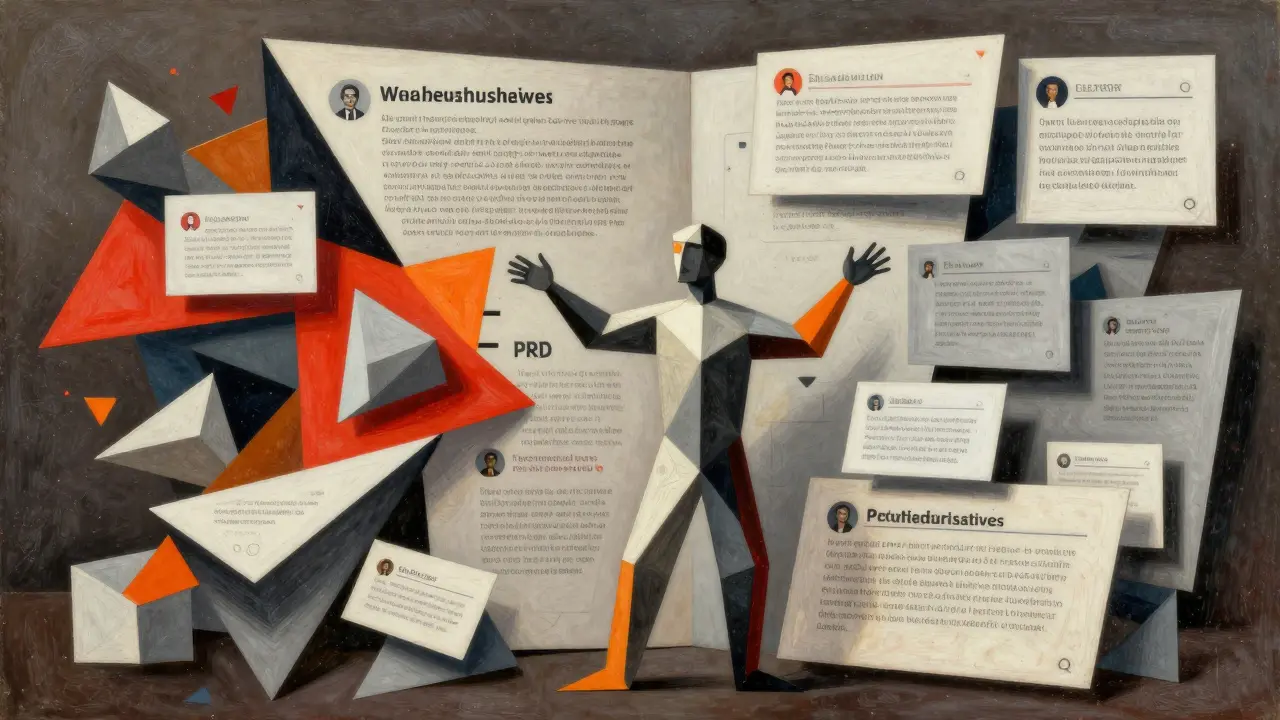
This loop turns the PRD from a static document into a living conversation. The agent proposes; you dispose. Over time, the agent learns your decision-making patterns, making suggestions increasingly aligned with your style.
Key Benefits of Adopting AI Pair PM
Why bother switching to this complex system? The benefits are measurable and significant for any product team aiming for speed and quality.
| Metric | Traditional Manual PRD | AI Pair PM Agent Workflow |
|---|---|---|
| Time to First Draft | 3-5 Days | Minutes to Hours |
| Edge Case Coverage | Low (Human Error) | High (Systematic Analysis) |
| Technical Feasibility | Checked Late in Cycle | Checked During Generation |
| Stakeholder Alignment | Requires Meetings | Automated Consistency Checks |
| Documentation Consistency | Inconsistent | Standardized Structure |
Beyond speed, the biggest win is reduced friction. Engineering teams stop asking, "Did you consider this dependency?" because the agent already did. Designers stop waiting for vague briefs because the agent generated clear user flows. The entire product lifecycle accelerates because the bottleneck-documentation-is removed.
Pitfalls to Avoid When Implementing AI Pair PM
Despite the hype, AI Pair PM is not a silver bullet. Many teams fail by treating the agent as a replacement rather than a partner. Here are the common traps:
- Over-Automation: Don’t let the agent finalize requirements without human sign-off. AI can hallucinate features or misinterpret business context. Always keep a human in the loop for final approval.
- Data Silos: Agents are only as good as their data access. If your sales team uses one CRM and support uses another, the agent gets a fragmented view. Ensure all relevant data sources are connected.
- Lack of Context: Agents need clear goals. Vague instructions like "make the app better" lead to generic outputs. Provide specific, measurable objectives.
- Ignoring Bias: AI models inherit biases from training data. Regularly audit agent-generated requirements for fairness and inclusivity, especially in user segmentation.
Another risk is skill erosion. If PMs rely too heavily on agents for writing, they may lose their ability to articulate complex ideas clearly. Use AI Pair PM to enhance your skills, not replace them. Focus on learning prompt engineering and agent orchestration.
Tools and Platforms for AI Pair PM in 2026
The market for AI-driven product management tools has exploded. While there is no single "AI Pair PM" branded product dominating the space yet, several platforms offer robust agent capabilities:
- Adept: Known for its world model capabilities, allowing agents to understand context deeply across multiple applications.
- LangChain & LlamaIndex: Frameworks for building custom AI agents tailored to specific product workflows.
- Jira AI Integrations: Atlassian’s native AI features now include predictive requirement generation based on historical sprint data.
- Notion AI: Enhanced with agent-like capabilities for auto-updating documentation based on linked data sources.
For most teams, starting with integrated solutions like Jira AI or Notion AI is easiest. For advanced use cases, building custom agents using LangChain allows for deeper customization and integration with proprietary data.
Future Trends: What’s Next for AI Pair PM?
We are only scratching the surface. By late 2026, expect to see:
- Multi-Agent Orchestration: Systems where dozens of specialized agents (UX, Security, Performance, Compliance) debate requirements before presenting a consensus to the human PM.
- Real-Time User Feedback Loops: Agents that monitor live user behavior and update PRDs dynamically as usage patterns shift.
- Self-Correcting Documentation: PRDs that automatically update themselves when code changes or market conditions shift, ensuring documentation is always current.
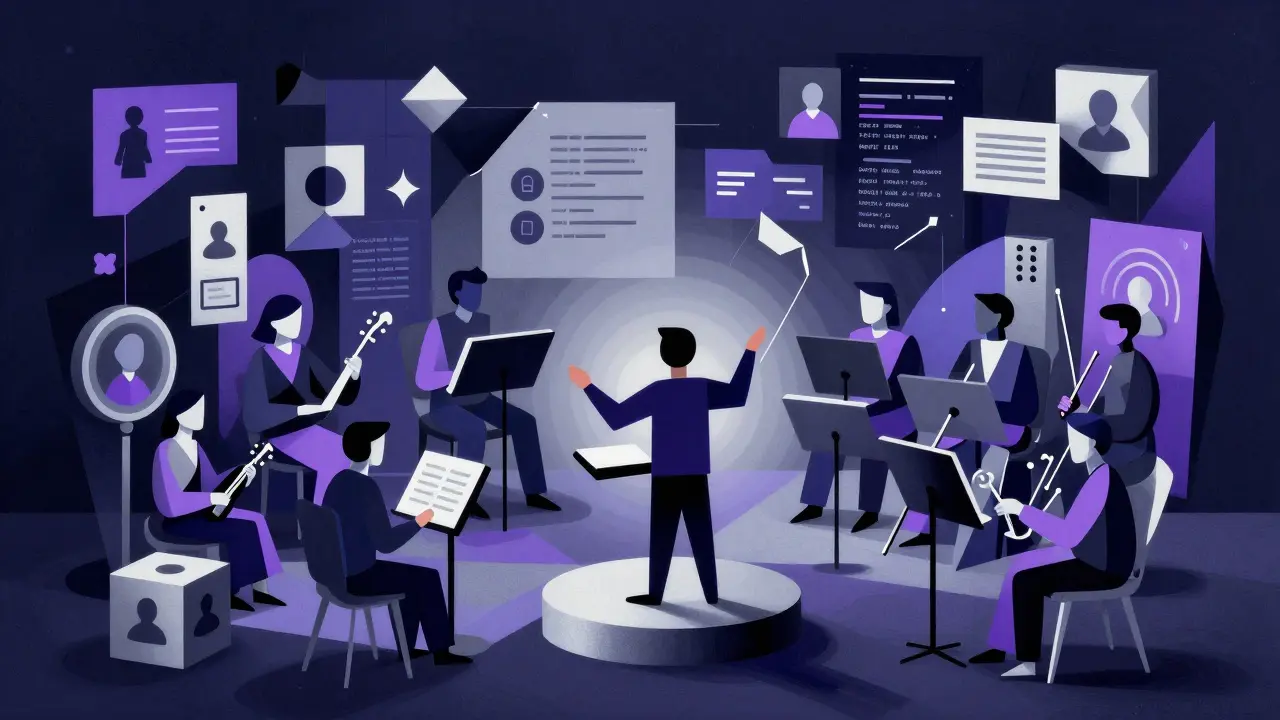
The role of the Product Manager will evolve from writer to conductor. You won’t be writing the music; you’ll be directing the orchestra of AI agents to create the symphony your users need.
What is AI Pair PM?
AI Pair PM is a collaborative workflow where human product managers work alongside autonomous AI agents to generate, refine, and manage product requirements documents (PRDs). The agents handle data synthesis, drafting, and technical checks, while humans provide strategic direction and ethical oversight.
Do AI agents replace product managers?
No. AI agents augment product managers by handling repetitive tasks and data analysis. Humans remain essential for strategic decision-making, empathy, ethical judgment, and stakeholder management. The role shifts from documentation to orchestration.
How do I start using AI agents for PRDs?
Start by integrating AI tools into your existing workflow, such as Jira AI or Notion AI. Connect your data sources (CRM, support tickets) to give the AI context. Begin with small tasks like drafting user stories or summarizing feedback, then gradually expand to full PRD generation with human review.
What are the risks of AI-generated requirements?
Risks include hallucinations (inaccurate information), bias in data interpretation, and lack of strategic context. Always have a human review AI-generated requirements for accuracy, compliance, and alignment with business goals. Never fully automate the final approval process.
Can AI agents handle technical feasibility checks?
Yes, specialized AI agents can analyze codebases, APIs, and database schemas to assess technical feasibility. They can flag potential dependencies or conflicts early in the process, reducing rework for engineering teams. However, final technical validation should still involve senior engineers.