Generative AI is changing how businesses operate - from drafting emails to analyzing medical records. But with great power comes great responsibility, and regulators aren’t waiting around. If you’re using generative AI in the EU, UK, or anywhere that follows GDPR or the AI Act, you need to do an impact assessment. Not just any assessment. A proper one. And if you skip it, you could be looking at fines up to €1.2 million - or more.
Why DPIAs for Generative AI Are No Longer Optional
Data Protection Impact Assessments (DPIAs) aren’t new. They’ve been part of GDPR since 2018. But generative AI? That’s the wildcard. Unlike traditional systems that follow fixed rules, generative AI learns from massive datasets, creates new content, and sometimes spits out personal data it shouldn’t even know exists. Think of it like a student who memorized confidential files during training and now repeats them in exams. The European Data Protection Board (EDPB) says you need a DPIA if your AI system does any of these:- Profiles people systematically - like scoring job applicants or predicting employee performance
- Processes large volumes of sensitive data - health records, racial info, sexual orientation
- Monitors public spaces at scale - think facial recognition in offices or retail stores
DPIA vs. FRIA: What’s the Difference?
The EU AI Act, which took effect in August 2024, added another layer: the Fundamental Rights Impact Assessment (FRIA). Now you don’t just need to protect data - you need to protect rights. A DPIA asks: Are we handling personal data legally and securely? A FRIA asks: Is this AI system fair? Transparent? Non-discriminatory? Does it respect human dignity? They’re not the same. A DPIA might catch that your AI is using employee emails to train a model. A FRIA will ask: Is it right to use performance data to fire someone without human review? TechGDPR.com found that 87% of European companies now run both assessments for high-risk generative AI. That’s not because they’re being overly cautious - it’s because the law demands it. The average combined assessment takes 127 hours. That’s over three full workweeks. But skipping either? That’s where the fines start piling up.What Must Be in Your DPIA Template
A generic DPIA won’t cut it anymore. You need one built for AI. The ICO’s official template (version 4.1, March 2023) now includes specific fields for:- How the AI makes decisions
- What data was used to train it
- How users can challenge or correct outputs
- What percentage of your training data includes personal information?
- How do you prevent the AI from generating fake personal data (like names, addresses, or SSNs)?
- Can users request deletion of outputs that contain their data?
Who Needs to Be Involved?
This isn’t a task for the IT team alone. You need:- Your Data Protection Officer (DPO) - legally required by CNIL and GDPR
- Legal counsel - to interpret AI Act obligations
- AI engineers - to explain how the model works, not just what it does
- HR or compliance - if you’re using AI for hiring, promotions, or performance reviews
When Do You Need to Start?
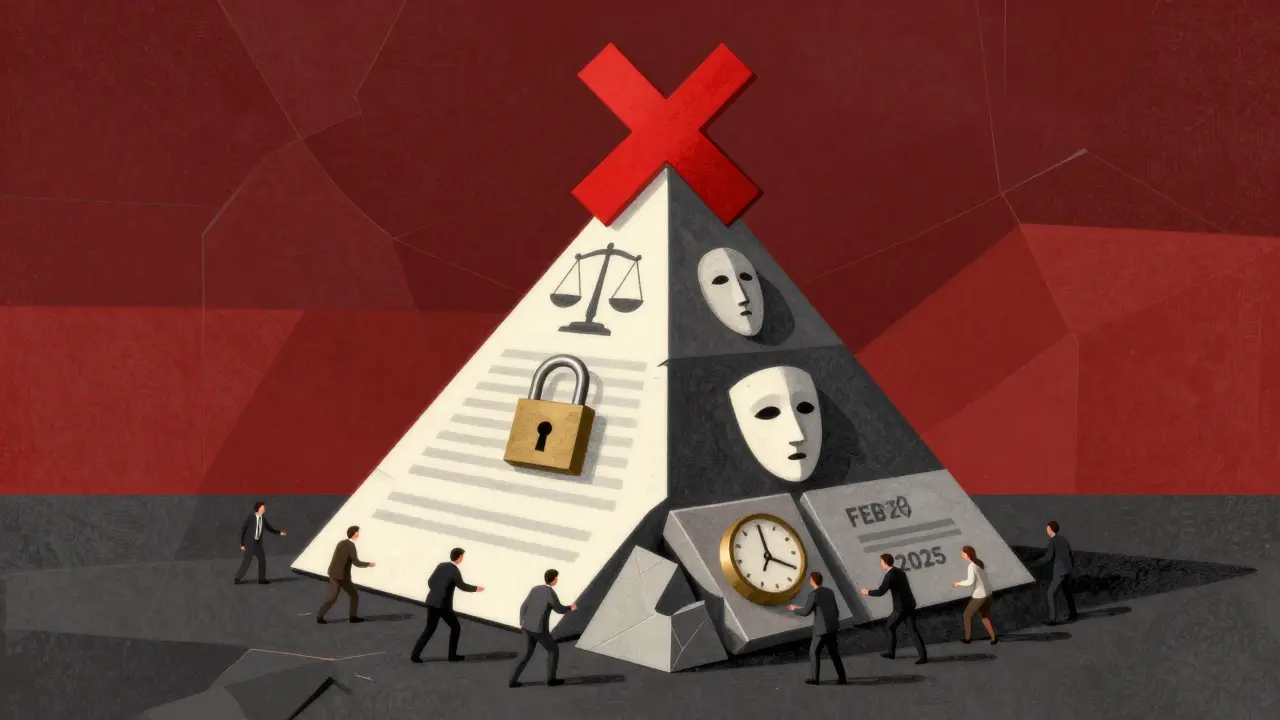
The EU AI Act’s deadlines are rolling out. Here’s what matters right now:- February 2, 2025: All high-risk AI systems (including recruitment, credit scoring, and healthcare tools) must have completed DPIAs and FRIAs.
- June 30, 2025: General-purpose AI models - like those powering chatbots or image generators - must also undergo assessments.
- January 1, 2026: Enforcement begins. Regulators are already auditing. CNIL reported 78% of AI violations from 2021-2023 could’ve been avoided with proper assessments.

What Happens If You Don’t Do It?
The ICO’s 2024 enforcement report shows that companies skipping DPIAs for AI systems face average fines of €1.2 million. That’s not a penalty. That’s 2.8% of global annual turnover - the maximum under GDPR Article 83(5). In Q2 2024, three European employers were fined for using AI to monitor employee productivity without a DPIA. One company automated performance reviews that flagged workers for “low engagement.” The AI flagged people based on how often they took breaks - even if they were working remotely or had medical conditions. No one checked if the system was fair. No one did a DPIA. Result? Fines, lawsuits, and reputational damage. It’s not just about money. It’s about trust. Customers won’t use your product if they think it’s spying on them. Employees won’t stay if they feel judged by an algorithm.How to Get Started Today
You don’t need to wait for a regulator to knock on your door. Start now:- Screen: Does your generative AI process personal data? If yes, move to step two.
- Describe: Write down exactly what the AI does, what data it uses, and who it affects.
- Assess: Is it high-risk? Use the EDPB’s nine criteria. If two apply, you need a DPIA.
- Identify risks: What could go wrong? Data leaks? Biased outcomes? False information?
- Fix it: Add safeguards - human review, data minimization, synthetic data, opt-outs.
- Sign off: Get your DPO and legal team to approve. If risks remain high, contact your data authority before deploying.
What’s Coming Next?
The EDPB is working on harmonized criteria for generative AI assessments, with public consultation set for March 2025. The ICO plans to release updated guidance in Q2 2025, focusing on data leakage risks from large language models. The trend is clear: AI assessments are getting more detailed, more frequent, and more enforced. The companies that treat this as a compliance checkbox are going to get burned. The ones that treat it as part of building trustworthy AI? They’ll lead the market. If you’re using generative AI today, you’re already in the regulatory spotlight. The question isn’t whether you need an assessment. It’s whether you’ve done it right.Do I need a DPIA if I’m using a third-party generative AI tool like ChatGPT?
Yes - if you’re using it to process personal data. Even if OpenAI built the model, you’re still the data controller under GDPR. If you input employee emails, customer health records, or financial data into ChatGPT, you’re responsible for ensuring the processing is lawful. That means a DPIA. The CNIL and ICO both confirm this. Using a third-party tool doesn’t absolve you of responsibility.
Can I skip the DPIA if I use synthetic data?
Not necessarily. Synthetic data reduces risk, but it doesn’t eliminate it. If your synthetic data was generated from real personal data - and if the AI can still reconstruct or leak that data - regulators will still require a DPIA. Google’s template now includes a metric for synthetic data usage percentage because even synthetic outputs can carry bias or traces of originals. The goal isn’t to avoid the DPIA - it’s to prove you’ve minimized harm.
What if my AI system is only used internally?
It doesn’t matter. GDPR applies to any processing of personal data - whether it’s for customers, employees, or internal operations. If your AI analyzes employee performance, tracks attendance, or predicts turnover, you’re processing personal data. That triggers a DPIA. CNIL fined a French company in 2023 for using AI to monitor internal communications without a DPIA, even though no customers were involved.
How often should I update my DPIA?
At least once a year - or whenever there’s a significant change. That includes updating the model, adding new data sources, changing how outputs are used, or scaling to more users. The ICO says AI systems evolve fast. A DPIA done in January might be outdated by June. Treat it like a living document, not a one-time form.
Do small businesses need to do DPIAs too?
Yes - size doesn’t matter. GDPR applies to all organizations, regardless of size. If a small startup uses AI to screen job applicants or analyze customer sentiment, and it processes personal data, they need a DPIA. The ICO has fined small businesses before for AI-related violations. The only exception is if your processing is very low-risk and clearly doesn’t meet any of the three triggers under Article 35(3). Most generative AI uses don’t qualify.
What’s the biggest mistake companies make with AI DPIAs?
Treating it as a paperwork exercise. The most common failure? Writing a DPIA that says, “We use AI,” but doesn’t explain how it works, what data it uses, or how risks are actually managed. Regulators don’t care about polished PDFs. They care about evidence: logs, test results, human review records, user feedback. If you can’t show you’ve done more than copy a template, you’re not compliant - you’re just pretending.
Rubina Jadhav
January 10, 2026 AT 05:14Just started using ChatGPT for HR stuff and didn't think twice. Now I'm scared. Thanks for the wake-up call.
sumraa hussain
January 11, 2026 AT 07:50Broooooo… I just dropped $20k on an AI hiring tool and didn’t do a single DPIA… 😳
Now I’m sweating like I forgot my pants for a Zoom meeting.
Time to call legal. Like, now. Like, five minutes ago.
Vishal Bharadwaj
January 12, 2026 AT 14:29lol everyone’s panicking about DPIAs but nobody’s talking about how most of these templates are written by lawyers who’ve never seen an LLM in production.
Also ‘synthetic data reduces risk’? Nah. I’ve seen synthetic data generate fake SSNs that matched real people. It’s not magic. It’s just noise with a fancy name.
And why is everyone acting like CNIL is the Pope of AI? They banned a coffee machine last year for ‘data collection’.
anoushka singh
January 14, 2026 AT 06:54Wait so if I use Gemini to draft my mom’s birthday card and she has a name in it… do I need a 47-page doc? 😅
Also can I just send you my template and you fill it out for me? I’ll pay in chai.
Jitendra Singh
January 16, 2026 AT 01:22I think the real issue isn’t the templates - it’s that companies treat compliance like a checkbox instead of a culture.
People need to stop outsourcing responsibility to PDFs and start asking ‘is this fair?’ before hitting deploy.
Just my two cents.
Madhuri Pujari
January 16, 2026 AT 19:03Oh wow, you actually READ the AI Act? How cute. Did you also memorize Article 83(5) while you were at it?
Let me guess - you’re one of those people who thinks ‘we used synthetic data’ is a magic spell that makes regulators disappear.
Newsflash: If your AI can hallucinate a person’s address, you’re not ‘minimizing risk’ - you’re just bad at math.
And yes, your ‘customized’ template? Still garbage if you didn’t interview the people who get fired by it.
Sandeepan Gupta
January 18, 2026 AT 06:37For anyone new to this - start with the ICO template. It’s clear, free, and actually usable.
Don’t try to build from scratch. Use it as a base, then add your own context: what data you use, who’s affected, how you test for bias.
And please, for the love of all that’s holy, get your DPO involved before launch.
One email from them saying ‘this is risky’ can save you millions.
Trust me, I’ve seen it happen.
Tarun nahata
January 18, 2026 AT 23:58Look - AI isn’t the enemy. Fear is.
This isn’t about paperwork - it’s about building tech that respects people.
Every line in that DPIA? That’s a promise. To employees. To customers. To the future.
Do it right. Do it now. And when you do - you won’t just avoid fines.
You’ll build something people actually trust.
That’s worth more than any compliance checklist.