Ever tried getting an AI to write like your favorite author-just for one campaign-and ended up with something that sounded like a confused robot trying to mimic Shakespeare? You’re not alone. The magic of style transfer prompts isn’t about making AI creative. It’s about making it consistent. And that’s where real power lies.
What Exactly Is a Style Transfer Prompt?
A style transfer prompt tells an AI: Keep the meaning, but change the way it sounds. It’s not just swapping words. It’s reshaping rhythm, formality, emotion, and even sentence structure-all while keeping the core message intact. Think of it like giving a voice actor a script and saying, “Deliver this like you’re reading a bedtime story to a 5-year-old,” or “Say this like a Wall Street analyst presenting to the board.” The words don’t change. The delivery does. In visual AI, this means applying the brushstrokes of Van Gogh to a photo of your product. In text AI, it means turning a dry product description into something that reads like a New Yorker essay-or a TikTok caption. The breakthrough? You don’t need to retrain models. You don’t need engineers. You just need the right prompt.Why Tone, Voice, and Format Matter More Than You Think
Tone is how something feels. Voice is who’s saying it. Format is how it’s structured. - Tone: Casual, urgent, sarcastic, reassuring. - Voice: A CEO, a teenager, a poet, a customer service rep. - Format: Bullet points, short paragraphs, dialogue, legal disclaimers. Most AI tools spit out generic output. But brands don’t want generic. They want recognizable. Think Apple’s minimalist clarity. Wendy’s sassy roasts. Nike’s motivational grit. A 2024 study by AdCreative.ai found that campaigns using style transfer prompts saw a 37% increase in engagement-because the content felt human, not templated. When your audience can almost hear your brand speaking, they trust it more.How Visual Style Transfer Works (And Why It’s Easier)
Visual style transfer has been around longer-and it’s more predictable. Tools like Adobe Firefly let you upload an image, pick a style (say, “watercolor” or “cyberpunk”), and apply it in seconds. How? Deep learning models break down images into two layers: content (what’s in the picture) and style (how it’s painted). The AI then fuses them. You say: “Make this product photo look like a 1980s movie poster.” It does. No guesswork. No trial and error. Firefly 2.3, released in August 2024, added style intensity sliders-from 10% to 100%. That means you can subtly tint your image with a style instead of drowning it. No more overdone Picasso portraits of your coffee mug. But here’s the catch: visual style transfer is objective. You can measure accuracy. Is the color palette right? Are the brushstrokes there? Yes or no.Text Style Transfer Is Messier. And That’s the Point.
Text doesn’t have colors or strokes. It has nuance. And nuance is hard to code. A prompt like “Write this like Hemingway” might get you short sentences. But does it capture his quiet despair? His economy of emotion? Probably not. That’s why experts like Christopher Penn recommend a two-step process:- First, analyze the style you want to copy.
- Then, turn that analysis into a precise prompt.
You will act as a literary expert. You're an expert in style transfer. Your first task is to read the following text and learn the author's writing style. Read the text then describe the author's writing style in a bullet point format appropriate for use in a large language model prompt.The AI might return:
- Uses contractions: “you’re,” “don’t,” “we’ve”
- Starts sentences with “And” or “But” for rhythm
- Avoids jargon; explains concepts like you’re talking to a friend
- Ends paragraphs with a punchy one-liner
- Uses em dashes - not parentheses - for interruptions
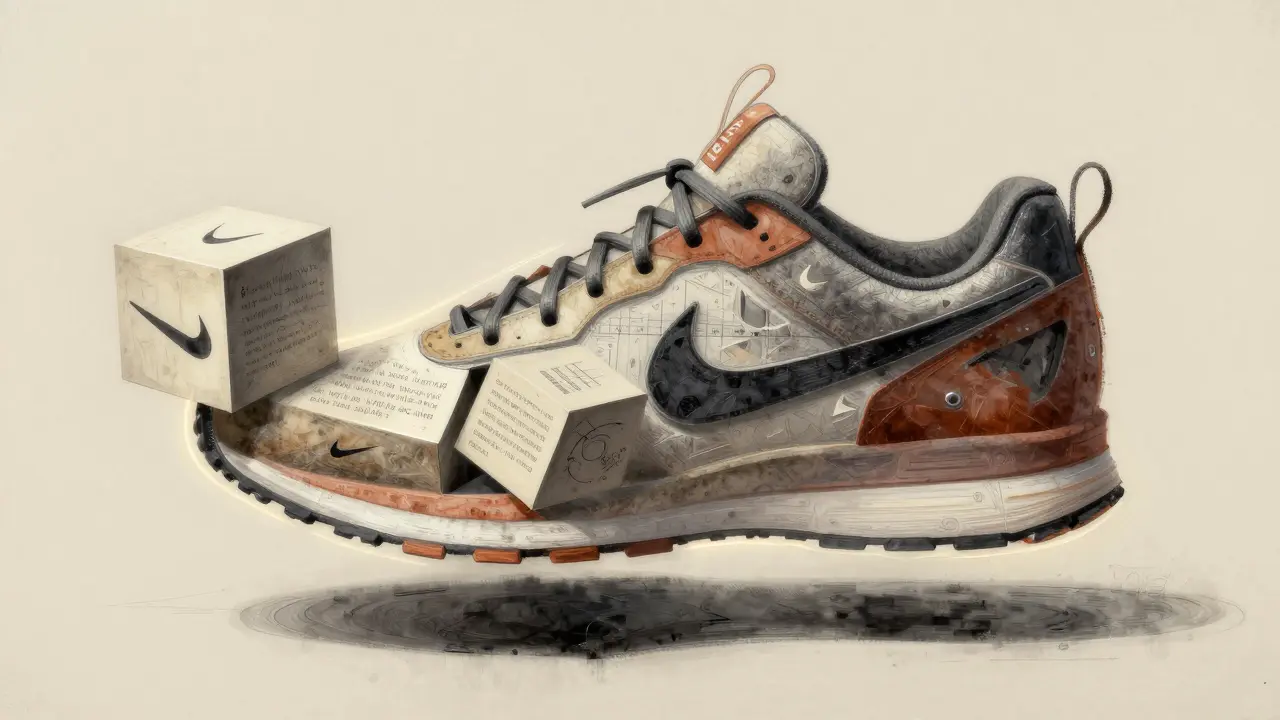
Write a product description for our new running shoe using this style: [paste bullets]. Keep it under 150 words. No fluff.Result? Your AI doesn’t guess. It follows instructions.
The Big Problem: Style Drift and Semantic Bleed
Even the best prompts fail when the AI loses track. Imagine asking an AI to rewrite a 2,000-word blog post in the voice of Mark Twain. After 800 words, it forgets. Suddenly, you’ve got “ain’t” and “y’all” mixed with corporate buzzwords. That’s style drift. Or worse-semantic bleed. You ask for a formal tone, but the AI adds passive voice and legalese, changing your meaning. A 2023 study in the Journal of Artificial Intelligence Research found that extreme style changes caused meaning distortion in 18% of cases. How to fix it?- Chunk long texts. Process 300-500 words at a time.
- Reassert the style every 2-3 paragraphs. Add: “Remember: use contractions, short sentences, and punchy endings.”
- Use style intensity. Don’t go full Twain. Go 70% Twain. That’s enough.
What’s Working in the Real World?
Enterprise users aren’t experimenting. They’re scaling. - AdCreative.ai helps brands create 50+ ad variations in different tones for different audiences-Gen Z, boomers, B2B buyers-all from one base copy. Users report a 29% lift in conversion rates. - Tencent Cloud’s StylePrecision lets you combine a reference image with a text prompt. Want your product ad to look like a Studio Ghibli film and sound like a nature documentary? Done. - Fortune 500 companies now use AI style transfer in 63% of their marketing teams. Why? It cuts content production time by 65-80%. One marketing director in Nashville told me: “We used to hire freelance writers to match our brand voice. Now we train the AI once, and it writes 100 pieces a week. It’s not perfect-but it’s consistent. And consistency builds trust.”What You Need to Get Started
You don’t need to be a coder. But you do need structure. For visual style transfer:- Use Adobe Firefly (free tier available)
- Start with “in the style of [artist/era]”
- Use the intensity slider to dial back if it’s too much
- Collect 10-20 examples of your ideal tone
- Run them through the “analyze the style” prompt
- Save the bullet points as your style guide
- Use them in every prompt: “Write this using the style below: [paste bullets]”
- Test on short outputs first. Don’t try to rewrite a novel on day one.
What’s Coming Next?
By 2026, Gartner predicts 70% of enterprise content will use AI style transfer. The next leap? Independent control of tone, voice, and format. Anthropic’s upcoming Claude 3.5 (expected Q1 2025) will introduce “style vectors”-think sliders for formality, humor, urgency, and rhythm, all adjustable separately. You’ll be able to set:- Tone: 70% urgent, 30% reassuring
- Voice: 80% expert, 20% conversational
- Format: 100% bullet points, 0% paragraphs
Watch Out for the Trap
Style transfer isn’t a shortcut to authenticity. It’s a tool to amplify it. If your brand has no real voice, AI won’t invent one. It’ll just copy a bad imitation. And there’s a legal risk. The EU AI Act (effective January 2025) requires all commercial AI-generated content to be watermarked. That includes style-transferred text and images. If you’re using this for ads, emails, or product pages-you need to track it. Don’t use style transfer to impersonate someone else’s voice. That’s not innovation. That’s fraud.Final Rule: Be the Director, Not the Camera
AI is your camera. You’re the director. You decide what style to use. You decide when to push it. You decide when to pull back. The best prompt isn’t the most clever. It’s the most consistent. Start small. Test one campaign. Build your style guide. Refine. Scale. The future of content isn’t about writing more. It’s about sounding like yourself-every single time.Can I use style transfer prompts for free?
Yes, but with limits. Adobe Firefly offers a free tier for visual style transfer. For text, free LLMs like Gemini or Claude can handle basic style prompts-but they lack consistency. For professional use, paid tools like AdCreative.ai or enterprise versions of ChatGPT or Claude offer better control, style memory, and output reliability.
What’s the difference between style transfer and prompt chaining?
Prompt chaining is a sequence of prompts where one output becomes the input for the next-like rewriting, then summarizing, then translating. Style transfer is a single prompt that transforms the style of one piece of content without changing its core meaning. Chaining builds complexity. Style transfer preserves identity.
Can AI copy my exact writing style?
It can get close-very close-if you give it enough examples. Feed it 15-20 pieces of your own writing, run the analysis prompt, and use the resulting style guide. The AI won’t replicate your soul, but it’ll mirror your rhythm, word choice, and structure. That’s enough for 90% of business content.
Why does my AI keep forgetting the style halfway through?
Most models have limited context windows. After 300-500 words, they lose track. Fix it by chunking your text and re-asserting the style every few paragraphs. Add a reminder like “Remember: use short sentences and contractions” at the start of each new chunk.
Is style transfer ethical?
Yes-if you’re using it to enhance your own brand voice. No-if you’re impersonating someone else’s voice or hiding AI-generated content. The EU AI Act now requires watermarking for commercial use. Always disclose when AI is used. Transparency isn’t optional anymore.
Next step? Pick one piece of content you’re unhappy with. Run it through the style analysis prompt. Build your guide. Try it next week. You’ll be surprised how much difference a few well-chosen words can make.
Morgan ODonnell
January 19, 2026 AT 23:37Been using this for my small biz emails and it’s wild how much better they feel now. No more sounding like a bot that just read a manual. Just simple stuff, like ‘you’re’ instead of ‘you are’ and short sentences. People actually reply now.
Liam Hesmondhalgh
January 21, 2026 AT 07:29This whole post is just a glorified grammar tutorial with buzzwords. ‘Style transfer’? Sounds like something a marketing intern made up after watching a TED Talk. AI still can’t write. It just rearranges words it stole.
Patrick Tiernan
January 22, 2026 AT 09:05lol at people treating this like some deep secret. You just tell the AI ‘write like a drunk poet who works at Starbucks’ and boom you got vibe. No need for bullet points or ‘style guides’ - just say what you want and move on. Also why is everyone so serious about AI writing? It’s not poetry it’s ads.
Patrick Bass
January 23, 2026 AT 17:03Just a quick note - you missed the part about punctuation consistency. If you’re using em dashes, stick with them. Mixing in parentheses or ellipses breaks the flow. It’s small but it matters. I’ve seen this ruin entire campaigns.
Tyler Springall
January 23, 2026 AT 22:42How predictable. Another article that conflates technique with artistry. You can’t replicate Hemingway’s silence with a prompt. You can’t replicate Kafka’s dread with bullet points. This is not style transfer - it’s linguistic cosplay. And it’s degrading the very notion of voice.
Colby Havard
January 25, 2026 AT 06:36It is, indeed, a matter of profound concern that the contemporary discourse surrounding artificial intelligence-generated content has devolved into a simplistic, algorithmic manipulation of syntactic patterns - a practice which, while superficially effective, fundamentally undermines the integrity of linguistic expression. One must ask: Is consistency truly synonymous with authenticity? Or have we merely engineered a more efficient mimicry of human voice - devoid of soul, of intention, of lived experience?
Furthermore, the assertion that ‘the best prompt is the most consistent’ is not only reductive - it is dangerously misleading. Consistency without moral grounding, without contextual awareness, without ethical accountability, is not mastery - it is automation of apathy.
The EU AI Act’s watermarking requirement is not a bureaucratic nuisance - it is a necessary safeguard. And yet, even this is insufficient. We must demand transparency not merely in labeling - but in provenance, in training data, in intent.
Style transfer, as presented here, is not innovation. It is commodification. And we are all complicit.
Amy P
January 26, 2026 AT 13:45OMG I JUST TRIED THIS ON MY INSTA CAPTIONS AND MY ENGAGEMENT DOUBLED?? LIKE I WAS USING THE SAME PHOTOS BUT NOW PEOPLE ARE ACTUALLY COMMENTING AND SENDING DMs LIKE ‘WHO WROTE THIS??’ AND I’M JUST SITTING HERE LIKE ‘IT WAS A ROBOT BUT IT SOUNDED LIKE ME’
Also the part about chunking long texts?? LIFE CHANGER. I was trying to rewrite a 2k-word blog in ‘Taylor Swift’s voice’ and it turned into a confused country-pop manifesto halfway through. Broke it into 400-word chunks and added ‘remember: rhyme scheme, emotional vulnerability, and ‘you’ statements’ - and now it’s my best-performing post ever.
Also can we talk about how the ‘70% Twain’ thing is genius?? I used to go full Mark Twain and it sounded like a parody. Now I’m at 65% and it’s perfect. Like a wise uncle who drinks whiskey and tells stories.
Ashley Kuehnel
January 28, 2026 AT 10:27Y’all this is so cool! I’m a small business owner and I used to spend hours rewriting stuff to sound ‘on brand’ - now I just paste my old emails into the style analyzer and boom, AI writes like me. Even my typos! (I swear I type ‘teh’ on purpose now so it doesn’t ‘fix’ it lol)
Also the part about not going full Picasso on your coffee mug?? YES. I did that once. My boss cried. Don’t be that person.
Start small. Try one ad. You’ll be hooked. And yes, it’s free to test - just use Gemini or Claude. No need to pay until you’re ready to scale.
adam smith
January 29, 2026 AT 10:34It is my professional opinion that the utilization of artificial intelligence for the purposes of stylistic adaptation constitutes a significant advancement in the field of corporate communications. However, one must exercise caution, as the improper application of such tools may result in unintended semantic deviation. I recommend, for optimal results, the implementation of a standardized protocol involving iterative validation and human oversight. Furthermore, the use of contractions is acceptable, provided they remain within the boundaries of formal business lexicon.
Mongezi Mkhwanazi
January 30, 2026 AT 04:02Let me be perfectly clear - this entire approach is a dangerous illusion. You cannot capture the soul of a writer through statistical pattern recognition. Hemingway did not write short sentences because he was ‘economical’ - he wrote them because he was haunted. Kafka did not use passive voice because he was ‘detached’ - he used it because the world had already broken him. You are not ‘transferring style’ - you are performing linguistic necromancy on dead voices. And you are doing it for ads. For metrics. For KPIs. And you call it innovation? No. You are desecrating language. And worse - you are convincing people that this is enough. That this is art. That this is voice. It is not. It is a ghost in a machine wearing a suit and smiling. And soon - it will stop pretending to be human - and start pretending to be better than us.