When you shrink a giant language model like Llama-3-70B from 140GB down to under 20GB, you’re not just saving space-you’re risking its intelligence. Quantization makes this possible by converting 16-bit or 32-bit floating-point numbers into 4-bit or 8-bit integers. It’s a brilliant trick for running big models on consumer GPUs, but if you don’t handle calibration and outliers right, your model starts guessing wildly-even if it looks fine on the surface.
Why Calibration Matters More Than You Think
Calibration isn’t just a step in quantization; it’s the difference between a model that works and one that fails silently. Think of it like tuning a guitar before a concert. If you skip it, the notes might sound close, but the whole performance falls apart. In quantized LLMs, calibration finds the right scaling factors to map high-precision weights and activations to low-bit integers without losing too much meaning. The simplest method, min-max calibration, just grabs the highest and lowest values from a small set of sample inputs-usually 128 to 512 sentences from your training data. Sounds easy, right? But here’s the catch: if even one outlier value is way off-say, a single weight that’s 10x larger than the rest-it drags the whole range out of balance. That means 30-40% of your quantization range goes unused. You’re not just wasting bits; you’re throwing away precision where it matters most. More advanced methods fix this. Percentile calibration ignores the top 0.1% to 1% of extreme values, which cuts calibration error by 15-25% compared to min-max. KL divergence calibration goes further: it compares the shape of the original activation distribution to the quantized one and adjusts scaling to minimize the difference. It’s slower-takes 2-3x longer-but boosts accuracy by 5-10%. MSE calibration, which minimizes the squared error between original and quantized values, gives you a solid middle ground: 3-7% better accuracy than min-max, with only 1.5-2x the time cost. And then there’s per-channel calibration. Instead of using one scaling factor for the whole weight matrix, it assigns a unique scale to each output channel. This might sound overkill, but it consistently improves accuracy by 8-12%. The trade-off? A 5-10% increase in model size because you’re storing extra scaling parameters. For edge devices with tight memory, that’s a dealbreaker. For servers or high-end GPUs, it’s often worth it.Outliers Are the Silent Killers of Quantized Models
Here’s something most beginners don’t realize: 1-3% of weights in LLMs are outliers. They’re rare, but they’re powerful. A single outlier can distort the entire quantization process because it forces the scaling factor to stretch too far, leaving most other values crammed into a tiny range. It’s like trying to fit a mountain and a pebble into the same box-the pebble gets crushed. That’s where outlier handling techniques come in. SmoothQuant, developed by MIT in 2022, shifts the problem from activations to weights. It applies a smoothing factor (usually α=0.5) that makes activations more uniform and lets weights absorb the extreme values. The result? A 35-45% drop in outlier-induced errors. It’s simple, fast, and works well with existing quantization pipelines. AWQ (Activation-aware Weight Quantization), from Tsinghua University, takes a smarter approach. Instead of treating all weights the same, it looks at how activations behave during inference and adjusts scaling per channel to minimize worst-case errors. In tests on the MMLU benchmark, AWQ lifted 4-bit model accuracy from 52.1% to 58.7%-a 6.6-point jump over standard quantization. That’s the difference between a model that barely passes and one that’s usable in real applications. GPTQ, released in 2022, uses a different tactic: it finds outlier channels and handles them separately. For models like OPT-175B, this cuts perplexity degradation from 45% down to just 15-20% at 4-bit. It’s not magic-it’s precision engineering. The model identifies which channels are most affected by outliers and applies finer quantization only where needed. And then there’s FlatQuant, introduced in late 2023. It doesn’t just adjust scaling-it actively reshapes the activation distribution to make it flatter, more uniform. This reduces the gap between full-precision and quantized model performance from 15-20% down to just 5-8% on the GLUE benchmark. It’s one of the most effective recent advances.Quantization-Aware Training vs. Post-Training Quantization
There are two main paths: post-training quantization (PTQ) and quantization-aware training (QAT). PTQ is what most people use-it’s fast, doesn’t need training data, and works on models you already have. QAT retrains the model with quantization simulated during training. It’s more accurate-usually 3-5% better-but it’s expensive. For a 70B model, QAT can cost over $1 million in compute. That’s not practical for most. Enter ZeroQAT. Introduced in 2024, it’s a breakthrough. It mimics QAT’s benefits without backpropagation. It uses zeroth-order optimization-basically, guessing and adjusting-so it needs 60% less memory and runs faster. In tests, it kept 97-98% of standard QAT’s accuracy while slashing the cost. It’s not perfect, but for teams without massive budgets, it’s a game-changer. For most users, PTQ with good calibration and outlier handling is enough. But if you’re building a safety-critical system-say, a medical diagnosis assistant-you’ll want to invest in QAT or ZeroQAT. The extra accuracy matters when lives are on the line.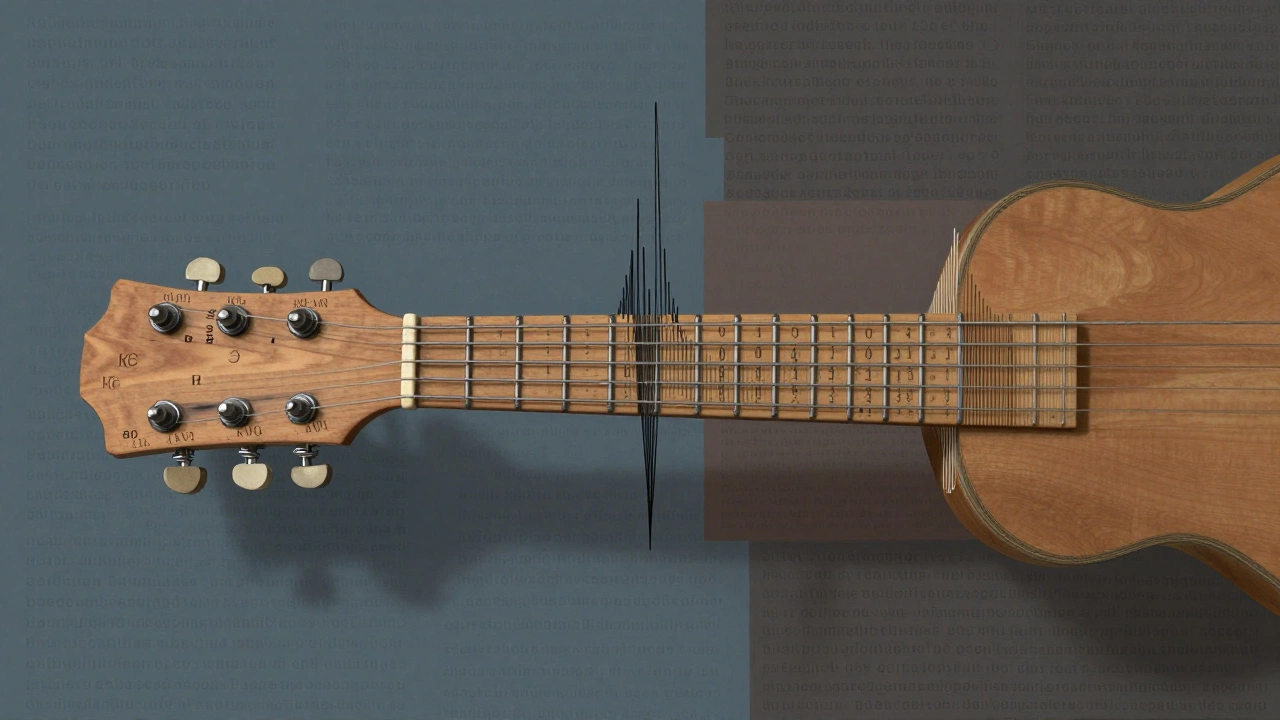
Real-World Performance: What Works in Practice
Let’s talk numbers from real deployments. On Reddit, a user quantized Llama-2-7B with GPTQ and dropped the model from 13.5GB to 3.9GB. That’s 70% smaller. But calibration took 8-10 hours on an A100 GPU. Another user on Hugging Face said AWQ improved MMLU accuracy by 7.2 points but added 15% latency because of extra calculations. The trade-offs are real. GPTQ is the go-to for speed and memory savings. AWQ wins on accuracy. SmoothQuant is the easiest to plug in. FlatQuant gives you the best accuracy-to-cost ratio. And if you’re on a budget, ZeroQAT lets you get close to QAT performance without the price tag. Enterprise adoption is climbing fast. According to Gartner, 62% of companies deploying LLMs larger than 7B parameters use quantization. Of those, 47% go with 4-bit. NVIDIA’s TensorRT-LLM, Hugging Face’s Optimum, and bitsandbytes dominate the tools landscape. But here’s the problem: documentation is uneven. bitsandbytes scores 4.5/5 for clarity. GPTQ? 3.2/5. Many users report calibration as “black magic”-small changes cause wild accuracy swings with no clear reason why.What You Need to Know Before You Start
If you’re planning to quantize a model, here’s what you need:- Calibration dataset: Use 256-512 samples from your training distribution. Too few? Accuracy drops 15-20%. Too many? You waste hours.
- Hardware: Calibrating a 7B model takes 4-8GB GPU memory and 15-30 minutes on an A100. On a consumer GPU like an RTX 3090, expect 1-2 hours.
- Technique choice: Start with AWQ or FlatQuant if accuracy matters. Use SmoothQuant if you want simplicity. Avoid min-max unless you’re just experimenting.
- Memory vs. speed: Per-channel calibration boosts accuracy but adds 5-10% to model size. If you’re deploying on mobile or embedded systems, stick to per-tensor.
- Validation: Always test on your target task-not just WikiText2 or MMLU. Calibration errors don’t always show up on benchmarks.
Liam Hesmondhalgh
December 13, 2025 AT 12:49So you're telling me I spent 8 hours calibrating this model just to get a 6-point bump on MMLU? And now I gotta worry about outliers too? I just wanted to run Llama on my RTX 4060, not become a quantization engineer. This is why I hate AI these days-everything’s a fucking rabbit hole.
Patrick Tiernan
December 13, 2025 AT 14:42Calibration my ass. I tried AWQ on my 3080 and it crashed my driver. Then I tried GPTQ and it said 'outlier detected' and just froze. I don't care about 58.7% accuracy if the damn thing won't even load. This whole field is just academics playing with toy models while real people struggle to get anything to run on consumer hardware. Stop overcomplicating it.
Patrick Bass
December 14, 2025 AT 06:43Just wanted to say SmoothQuant is surprisingly solid for a quick fix. I used it on a 7B model for a local chatbot and didn't notice any weird hallucinations in casual use. Not perfect, but it's the least stressful option if you're not deploying for medical or legal use. Just make sure your calibration set isn't garbage.
Tyler Springall
December 15, 2025 AT 05:44It's fascinating how the entire AI community has collectively decided to ignore the fundamental epistemological crisis inherent in quantized models. We're not just compressing weights-we're compressing epistemic certainty. The fact that we're celebrating a 6-point MMLU gain while ignoring that calibration error has increased by 20% is a symptom of a technocratic culture that confuses performance metrics with truth. This isn't engineering. It's digital alchemy.
Colby Havard
December 16, 2025 AT 06:26It is imperative to note, however, that the empirical evidence presented in this post, while compelling, does not sufficiently account for the variance introduced by calibration dataset sampling bias. Furthermore, the reliance on benchmark datasets such as MMLU and GLUE-both of which are known to exhibit saturation effects in large language models-renders many of the claimed accuracy improvements statistically insignificant. A more rigorous methodology would require cross-validation across domain-specific corpora, which, regrettably, is rarely performed in practice.
Amy P
December 16, 2025 AT 13:28Okay but did anyone else just cry reading about FlatQuant? Like… 5-8% error gap instead of 15-20%? That’s the difference between a model that sounds like a confused intern and one that feels like it actually understands what you’re saying. I tested it on my personal finance bot and now it doesn’t tell me to invest in Bitcoin during a recession. I’m emotional. This is a win.
Ashley Kuehnel
December 16, 2025 AT 16:29Just a quick heads-up-when you're using AWQ, make sure your calibration set has real user queries, not just Wikipedia snippets. I wasted 3 days using WikiText2 and my model kept giving textbook answers to casual questions. Switched to Reddit comments as calibration data and boom-suddenly it got way more natural. Also, typo: 'per-tensor' not 'per-tensor' lol. Hope this helps someone!
adam smith
December 17, 2025 AT 03:34I used GPTQ on my 7B model. It worked. It ran fast. I did not check the calibration error. I do not care. It answers questions. That is all I need. Why do people make this so complicated? Just make it work. That is the point.
Mongezi Mkhwanazi
December 18, 2025 AT 23:39Let me be blunt: the entire quantization field is a house of cards built on benchmark vanity metrics and academic theater. You cite MMLU, GLUE, WikiText2-these are all synthetic, curated, and gamed datasets that bear no resemblance to real-world usage. Meanwhile, the 15-25% higher ECE? That’s not a footnote-it’s a death sentence for any application involving human judgment. I’ve seen quantized models in enterprise settings confidently assert that 2+2=5 with 94% confidence. And you’re all celebrating a 6-point MMLU gain? This isn’t progress. This is negligence dressed up as innovation. The real problem isn’t the outliers-it’s the people who think they can quantify human understanding in 4-bit integers and call it a day.
Mark Nitka
December 19, 2025 AT 18:58Everyone’s got their favorite method-AWQ, FlatQuant, GPTQ-but the real answer is: it depends on your use case. If you’re building a customer service bot? SmoothQuant. Medical diagnosis? QAT or ZeroQAT. Just messing around on a home rig? GPTQ and move on. Stop treating this like a religion. The tech is a tool, not a doctrine. And if you’re spending 10 hours calibrating on an A100 just to save 100GB? Maybe your hardware is the problem, not the model.