Five years ago, building a simple app meant learning JavaScript, setting up a server, debugging database connections, and spending months just to get something working. Today, a high school student in rural Ohio, a small business owner in Texas, or a teacher in Ohio can describe an idea out loud - "I want a dashboard that shows my sales numbers and lets me filter by week" - and get a working app in under an hour. No degree. No bootcamp. No years of typing syntax. This isn’t science fiction. It’s vibe coding.
What Exactly Is Vibe Coding?
Vibe coding isn’t just another tool. It’s a new way of building software. Instead of writing code line by line, you talk to an AI like you’re explaining an idea to a friend. You say: "Make a login page with Google sign-in and a password reset link". The AI writes the HTML, CSS, JavaScript, and even connects it to a database. Then you hit deploy. Done. It’s different from no-code platforms like Bubble or Webflow. Those tools force you to drag and drop buttons and menus. You’re stuck with what’s already built. Vibe coding gives you the freedom to describe anything - even things that don’t exist yet. And if the AI gets something wrong? You can tweak the code directly. It’s no-code for starting out, but full-code when you need to go deeper. Tools like GitHub Copilot, Google’s Gemini Code Assist, and Replit’s Agent are the engines behind this. They run on massive AI models trained on millions of real codebases. They don’t just guess - they understand context. Ask for a Python script that pulls data from an API and sends emails, and it’ll use the right libraries, handle errors, and even add comments. You don’t need to know what a REST endpoint is. You just say what you want.Who Can Build Now? The New Faces of Development
Before vibe coding, software development was a closed club. You needed formal training, expensive tools, and time to learn. Now, the door is wide open. Business owners and entrepreneurs are building internal tools without hiring developers. Sarah Chen, a product manager in Austin, used Replit to create three apps for her startup - a customer feedback tracker, an inventory manager, and a scheduling tool. She spent $0 on developers. Saved $45,000. "I didn’t need to wait for a dev team," she said on Hacker News. "I just told the AI what I needed. It worked." Teachers and educators are making classroom apps. One high school teacher in North Carolina built a quiz app that auto-grades student responses and sends results to parents. She’d never written a line of code before. After two hours of guided practice with Replit’s tutorial, she had a live site. Citizen developers - people without formal tech training - now make up 29% of AI-assisted coders, according to SlashData’s 2024 survey. That’s more than students. More than academics. These are nurses building patient tracking sheets, farmers creating crop monitoring dashboards, artists making portfolio sites with embedded video. Even non-tech roles in big companies are getting in on it. Microsoft found that 42% of new app prototypes inside the company now come from employees who don’t have "developer" in their job title. Marketing teams build campaign trackers. HR builds onboarding checklists. Sales teams create lead trackers. All with vibe coding.How It Works - Step by Step
You don’t need to be a wizard. Here’s how it actually plays out in real life:- Start with a clear idea. Don’t say "make an app." Say "I need a to-do list where I can add tasks, check them off, and see them sorted by priority."
- Use a vibe coding platform. Replit, GitHub Copilot, or Google’s AI Studio are the easiest to start with. All have free tiers.
- Type or speak your prompt. The AI asks clarifying questions if it’s unsure. You can refine it: "Make the color blue," or "Add a button to delete tasks."
- Review and tweak. The AI gives you code. It’s usually 70-80% right. You fix the rest. Maybe rename a variable. Maybe change the layout. You’re not coding from scratch - you’re editing a smart draft.
- Deploy with one click. Replit and others handle hosting, databases, and security automatically. No server setup. No cloud accounts. Just launch.

The Catch - It’s Not Magic
Vibe coding is powerful, but it’s not perfect. And pretending it is will get you into trouble. Security risks are real. GitHub’s 2024 report found that 37% of AI-generated code had security flaws - like hardcoded passwords, unvalidated inputs, or open database connections. If you’re building something that handles user data, you can’t just deploy and forget. You need to review it. Code quality varies. The AI often writes "spaghetti code" - messy, hard-to-read logic that works today but breaks next month. One Reddit user wrote: "The AI made my app run, but I spent two weeks cleaning it up. I learned more from fixing it than I would have from building it from scratch." It can’t replace deep expertise. Need a complex algorithm? A custom database schema? A real-time multiplayer feature? The AI still struggles. It’s great for the boring, repetitive stuff - forms, APIs, login flows - but not for the hard problems. Legal gray areas. Who owns the code the AI writes? Is it you? The tool? The company that trained the model? GitHub is facing a class-action lawsuit over this. If you’re building something commercial, tread carefully. Document everything.Vibe Coding vs. Traditional Tools
| Feature | Vibe Coding | No-Code (Bubble, Webflow) | Traditional Coding |
|---|---|---|---|
| Learning curve | Low - speak naturally | Low - drag and drop | High - months of study |
| Customization | High - edit generated code | Low - limited to templates | Full control |
| Speed | Hours to days | Days to weeks | Weeks to months |
| Scalability | Moderate - needs review | Low - hits limits fast | High |
| Cost | Free to $10/month | $30-$100/month | $50-$150/hour for devs |
| Best for | Prototypes, internal tools, simple apps | Marketing sites, simple forms | Enterprise systems, complex logic |
The Future Is Hybrid
The real power of vibe coding isn’t that it replaces developers. It’s that it changes who gets to be one. In 2025, teams look different. You’ve got a product manager who built the prototype. A designer who tweaked the UI. A marketer who added analytics. And yes - a senior developer who reviews the code, fixes security holes, and makes sure it scales. Google’s Chet Haase put it best: "Vibe coding accelerates development and makes app building more accessible, especially for those with limited programming experience." But he added: "The best outcomes happen when AI and humans work together." MIT professor Arvind Satyanarayan warns about the "dangerous gap" - people who can build apps but don’t understand how they work. That’s real. But it’s also fixable. The best vibe coders aren’t the ones who use AI the most. They’re the ones who learn from it. They read the code. They ask why it did what it did. They start to understand the logic behind the magic.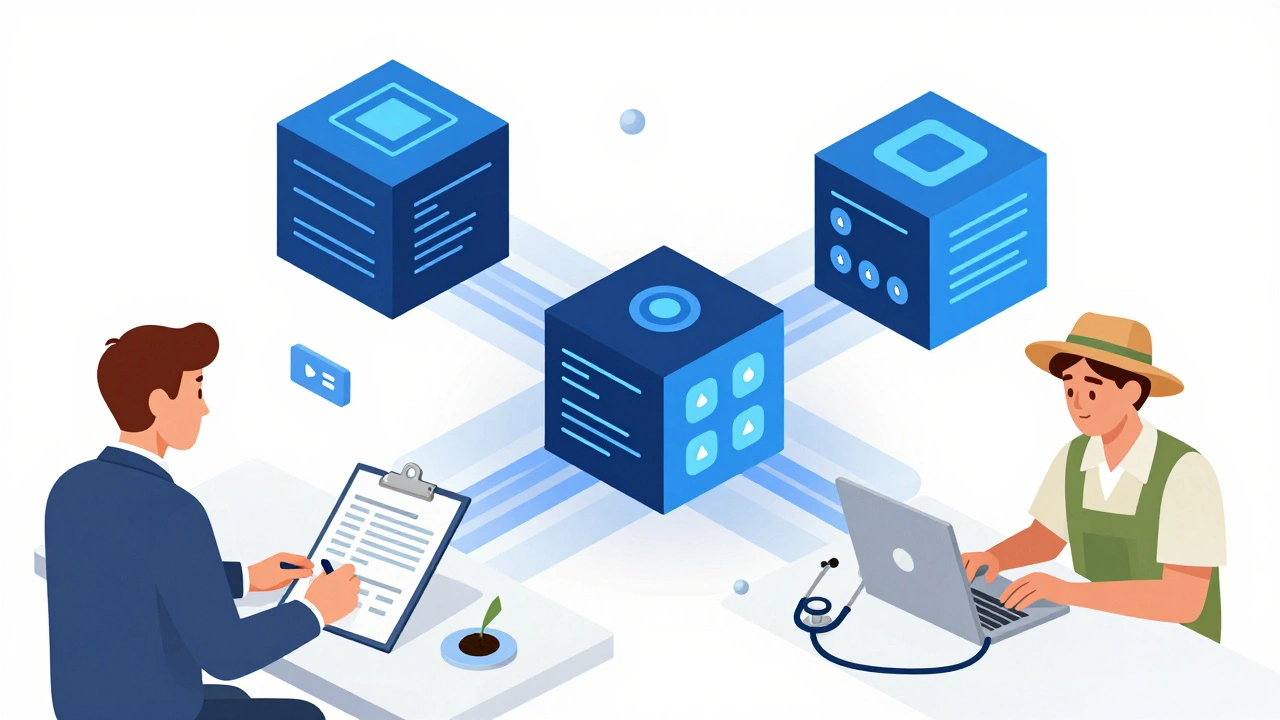
How to Get Started Today
You don’t need to wait. Here’s how to begin:- Go to Replit.com and sign up for free.
- Click "New Repl" and choose "Agent" mode.
- Type a simple idea: "Create a habit tracker with daily check-ins and streak counter."
- Watch the AI generate the code. Read it. Ask it to explain a line.
- Click "Run." See your app live.
- Change one thing. Add a color. Rename a button. See how it reacts.
Frequently Asked Questions
Do I need to know how to code to use vibe coding?
No. Vibe coding was built for people with zero coding experience. You just describe what you want in plain language. The AI writes the code. You don’t need to understand variables, loops, or functions to get started. That said, learning a little about how code works helps you fix mistakes and improve results.
Is vibe coding safe for business use?
It can be, but you need to be careful. About 37% of AI-generated code has security issues like hardcoded passwords or unsecured APIs. If you’re building something for customers or handling sensitive data, always have a professional review the code. Don’t deploy blindly. Use vibe coding for prototypes and internal tools first. Once you’re confident, bring in a developer to harden it.
Can vibe coding replace software developers?
Not anytime soon. Vibe coding excels at automating repetitive tasks - login screens, forms, basic APIs. But complex systems, performance optimization, security architecture, and scaling still need human experts. The future isn’t AI replacing devs - it’s devs working with AI to build faster and focus on harder problems. Developers who use vibe coding are 55% faster, according to GitHub.
What’s the difference between vibe coding and no-code tools?
No-code tools like Bubble or Webflow let you build with drag-and-drop blocks. You’re limited to what’s already built. Vibe coding gives you real code you can edit. You can describe anything - even features that don’t exist in the tool. It’s more flexible. You’re not stuck. If you need to add a custom feature, you just type it in. That’s why vibe coding is called "enhanced customization" by experts.
How much does vibe coding cost?
You can start for free. Replit’s Agent and Google’s Gemini Code Assist have free tiers. GitHub Copilot costs $10 per user per month. That’s less than a coffee a week. For most people building personal or small business apps, free tools are enough. If you’re building something commercial, the cost is negligible compared to hiring a developer.
What if the AI writes bad code?
It will. AI isn’t perfect. But you’re not alone. Most vibe coding tools let you ask the AI to explain, fix, or improve the code. Say: "This function is slow. How can I make it faster?" The AI will suggest optimizations. You’ll learn as you go. Think of it like having a smart intern who’s always available - they make mistakes, but they also teach you how to do better.
Liam Hesmondhalgh
December 13, 2025 AT 04:15Vibe coding? More like vibe lying. I tried it last week and the AI generated a login page that sent passwords to a Russian server. No thanks. I'll stick to real code written by people who actually know what they're doing.
Patrick Tiernan
December 13, 2025 AT 17:17so like... you just talk to a robot and it writes your code? wow. i bet that's why my uncle's "app" for his BBQ business crashed every time someone ordered ribs. he said "make it pretty" and now it's just a blue blob with a crying emoji. nope. nope. nope.
Patrick Bass
December 13, 2025 AT 23:36I've used Replit's agent a few times for small scripts. It's surprisingly good at boilerplate stuff. But I always read through the output. Sometimes it uses deprecated libraries or misses edge cases. It's a helper, not a replacement. Still, for someone starting out, it lowers the barrier a lot.
Tyler Springall
December 14, 2025 AT 22:03This is the most dangerous delusion to hit tech since the blockchain craze. You're not building software-you're outsourcing your cognitive labor to a statistically optimized parrot trained on GitHub's dumpster fire. One day, someone will deploy this "vibe code" in a hospital system and we'll all be asking why the EHR crashed during surgery. The arrogance of this movement is breathtaking.
Colby Havard
December 15, 2025 AT 07:33It is imperative to recognize that the proliferation of AI-assisted coding, while superficially democratizing, fundamentally undermines the epistemological foundations of software engineering. The absence of rigorous formal training leads to systemic fragility, latent vulnerabilities, and an erosion of professional standards. One cannot merely "vibe" one's way into computational literacy.
Amy P
December 16, 2025 AT 10:47OMG I tried this yesterday and it made me a habit tracker that actually WORKED?? I cried. I’m a 42-year-old mom who thought coding was for wizards in hoodies. I told it "make a thing that reminds me to drink water" and it did!! I changed the color to pink and added a cat emoji. It’s beautiful. I feel like a genius. 🥹
Ashley Kuehnel
December 16, 2025 AT 11:59hey! i just wanna say i used vibe coding to make a simple form for my book club to track what we read. it was so easy! i didn't know what a "variable" was before, but the ai asked me questions and i just answered. then i clicked run and boom-live site. the code it gave me was kinda messy but i fixed one line and now it's perfect. if you're scared to try, just start with something tiny. you got this!!
adam smith
December 18, 2025 AT 06:36I have observed that the use of AI-generated code may lead to unintended consequences. While it is convenient, it is not always reliable. I have seen multiple instances where the output contains logical errors that are difficult to detect without formal training. Therefore, I recommend that users proceed with caution and always verify the output.
Mongezi Mkhwanazi
December 19, 2025 AT 02:20Let me be unequivocally clear: this so-called "vibe coding" is not innovation-it is the commodification of ignorance under the guise of accessibility. You are not "building" anything; you are outsourcing your intellectual responsibility to a probabilistic language model trained on the collective noise of the internet. The 29% statistic cited? That’s not empowerment-it’s a warning label. These "citizen developers" are creating technical debt that will haunt organizations for decades. And yes, I’ve seen the code. I’ve seen the hardcoded API keys, the SQL injections, the unescaped user inputs. You think you’re saving money? You’re just delaying the inevitable audit, the breach, the lawsuit. And when it happens, who gets blamed? The teacher? The nurse? No. The company. The brand. The entire ecosystem. This isn’t progress. It’s a house built on sand. And the tide is coming in.