You know that feeling when you ask an AI to "build a notification system" and it spits out a tangled mess of synchronous calls and hardcoded dependencies? It’s frustrating. You wanted speed; you got technical debt. This is the trap of unstructured vibe coding. But there is a better way. By combining the loose, natural-language approach of vibe coding with the rigid structure of event-driven architecture (EDA), you can generate production-ready code in hours instead of days. The secret isn't just prompting-it's providing architectural guardrails.
Vibe coding, defined by AIM Consulting as a partnership where developers set direction while AI handles implementation, has exploded in popularity since 2023. However, applying this to complex systems like microservices requires discipline. Without it, you risk creating what experts call "Kafka disasters"-systems that are impossible to debug or scale. This guide breaks down how to use specific patterns and prompt templates to make AI your most reliable engineering partner, not your biggest liability.
Why Event-Driven Architecture Needs Guardrails
Event-Driven Architecture (EDA) is a paradigm where components communicate through creating, detecting, and consuming events. It’s perfect for decoupled microservices, but it’s notoriously hard to get right. Traditional development involves weeks of configuring message brokers, defining schemas, and writing boilerplate handlers. Vibe coding promises to skip that grind. The problem? Large Language Models (LLMs) trained on general code often default to simple, synchronous patterns because they’re more common in training data.
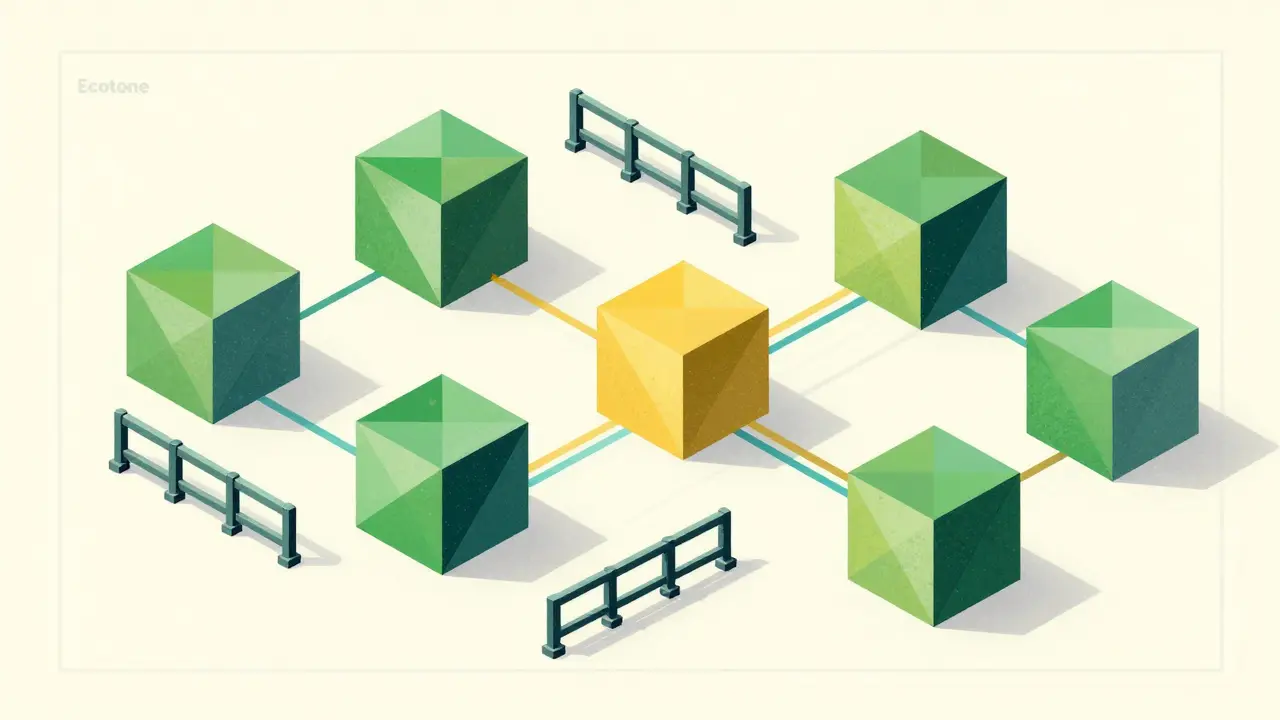
If you don’t constrain the AI, it will likely give you direct function calls instead of event publishing. This defeats the purpose of EDA. Frameworks like Ecotone Framework solve this by enforcing rules at the library level. For example, Ecotone mandates that all communication happens via messages. A command is handled by exactly one handler, and events are published, not returned. When you feed these constraints into an AI model, the output shifts dramatically. Instead of fighting bad habits in the training data, the AI follows the path of least resistance-which is now the correct architectural pattern.
| Approach | Time to Implementation | Code Revisions Needed | Architectural Consistency |
|---|---|---|---|
| Traditional Manual Coding | 3-5 Days | Low (if skilled) | High |
| Unstructured Vibe Coding | 1-2 Hours | High (63% more revisions) | Low (62%) |
| Structured Vibe Coding (with Templates) | 8-12 Hours | Low (22% fewer iterations) | Very High (89%) |
The data from Augment Code’s internal testing is clear: structured prompts reduce token usage by 37% and cut required iterations by 22%. Unstructured prompts might feel faster initially, but they lead to significantly higher churn later. The goal is to front-load clarity so the AI doesn’t have to guess.
Core Patterns for AI-Generated EDA
To get consistent results, you need to teach the AI which patterns to prioritize. Three specific patterns dominate successful event-driven implementations generated by AI:
- CQRS (Command Query Responsibility Segregation): Separates read and write operations. In vibe coding, you explicitly tell the AI to create separate models for commands (writes) and queries (reads). This prevents the AI from mixing logic and keeps the codebase clean.
- Event Sourcing: Instead of storing just the current state, every change is stored as an event. This is crucial for audit trails and debugging. When prompting, specify that the AI should persist domain events rather than updating database records directly.
- Sagas: These manage long-running transactions across multiple services. If a payment fails, a saga ensures the order is cancelled and inventory is restored. AI struggles with distributed transaction logic unless you provide a step-by-step saga template.
For instance, using the Ecotone Framework, you can define an asynchronous handler with a simple attribute like `#[Asynchronous('notifications')]`. The framework handles the queue worker configuration automatically. In tests, it runs synchronously for ease of debugging, but in production, it works asynchronously. This abstraction layer makes it much easier for AI to generate correct code because it doesn’t need to understand the underlying infrastructure details.
Building Effective Prompt Templates
The difference between a mediocre AI output and a robust system lies in your prompt structure. Augment Code’s Context Engine methodology suggests a four-phase approach. You shouldn’t just say "build me a dashboard." You need to provide context, constraints, and quantitative requirements.
Here is a proven template structure for generating event-driven features:
- Context: Define the existing stack and architecture. Example: "Microservices architecture with Node.js/PostgreSQL stack."
- Language & Tools: Specify libraries. Example: "TypeScript with Express.js and Prisma ORM."
- Expected Functionality: Describe the user outcome. Example: "Real-time user activity dashboard with WebSocket updates."
- Architecture Constraints: Enforce patterns. Example: "Event-driven with Redis pub/sub and JWT authentication."
- Quantitative Requirements: Set performance goals. Example: "Handle 10k concurrent users, <200ms response time."
This level of detail reduces ambiguity. According to Gartner analyst Mark Peacock, teams adopting this structured approach see 28% faster time-to-market. The key is treating the prompt as a specification document, not a casual request. Modular prompting also helps-guide the AI feature by feature. Start with data models, then move to event schemas, and finally to handlers. AIM Consulting found this modular approach yields 34% fewer implementation errors than trying to generate the whole system at once.

Avoiding Common Pitfalls
Even with good templates, things can go wrong. The most common issue is schema inconsistency. One developer on Reddit shared a horror story where their team created 42 event types with inconsistent naming conventions in just two weeks because they didn’t define a schema standard first. Always enforce strict naming conventions and versioning in your prompts. For example, require that all events follow the format `[ServiceName].[Entity].[Action]` (e.g., `OrderService.Order.Created`).
Another pitfall is ignoring testing complexities. Asynchronous flows are hard to test. If you rely solely on AI without understanding how to mock message queues, you’ll end up with brittle tests. Frameworks that allow async handlers to execute synchronously during testing, like Ecotone, mitigate this. Alternatively, instruct the AI to generate unit tests that mock the event bus, ensuring each handler is tested in isolation before integration tests verify the full flow.
Finally, beware of "architectural drift." Over time, small deviations in AI-generated code can accumulate. Regular code reviews focused specifically on adherence to event-driven principles are essential. Use tools that analyze your codebase for consistency, such as Augment Code’s Context Engine, which claims to detect patterns across hundreds of thousands of files to maintain alignment.
Implementation Strategy for Teams
Adopting this workflow requires a shift in mindset. Developers must become architects who curate AI outputs rather than writers who type every line. Here is a practical strategy for teams:
- Invest Time in Templates: Spend 15-20 hours upfront creating reusable prompt templates for common EDA scenarios (payments, notifications, audits). This yields a 5-7x return in reduced implementation time.
- Start Small: Apply vibe coding to non-critical modules first, like logging or basic notifications, to build confidence.
- Enforce Schema Governance: Create a central registry for event schemas. Require AI to reference this registry when generating new events.
- Review for Decoupling: Check generated code to ensure services aren’t tightly coupled through shared databases or direct API calls. Events should be the only link.
Market adoption is accelerating. JetBrains’ 2024 report shows 42% of professional developers use AI assistants regularly, with 28% specifically targeting event-driven components. Fintech and e-commerce sectors are leading this charge due to the complexity of their workflows. By 2025, Gartner predicts 60% of enterprise teams will use structured vibe coding for these systems. The companies that thrive will be those that treat prompt engineering as a core engineering discipline, not a novelty.
What is vibe coding in the context of event-driven architecture?
Vibe coding is a development approach where developers define high-level requirements and architectural direction using natural language, while AI generates the detailed implementation code. In event-driven architecture, this means describing business events and flows, and having the AI produce the corresponding message handlers, schemas, and broker configurations.
How do prompt templates improve AI code generation for EDA?
Prompt templates provide necessary context, constraints, and quantitative requirements that guide the AI away from generic or synchronous patterns. By specifying architecture styles (like CQRS), tech stacks, and performance metrics, templates reduce hallucinations and ensure the generated code adheres to established event-driven best practices, cutting revision time by up to 22%.
What are the risks of unstructured vibe coding?
Unstructured vibe coding often leads to significant technical debt, including inconsistent event schemas, tight coupling between services, and lack of proper error handling. Studies show it results in 63% more code revisions compared to structured approaches, as the AI defaults to simpler, less scalable patterns without explicit architectural guidance.
Which frameworks support AI-friendly event-driven development?
Frameworks like Ecotone for PHP are designed with messaging as a core paradigm, making them highly compatible with AI generation. They enforce rules such as single-purpose command handlers and published events, which aligns well with LLM training data and reduces the likelihood of architectural deviations. Other tools like Augment Code provide context engines that analyze existing codebases to maintain consistency.
How can teams prevent architectural drift when using AI?
Teams can prevent drift by implementing strict schema governance, using modular prompting strategies, and conducting regular code reviews focused on decoupling and event consistency. Investing in initial prompt template creation and utilizing tools that detect architectural patterns across the codebase helps maintain long-term structural integrity.