When an AI system makes a bad call-denying a loan, misdiagnosing a condition, or recommending harmful content-it’s rarely because of one broken line of code. It’s because of a chain of decisions, some documented, most not. That’s where changelogs and decision logs come in. They’re not fancy tools. They’re simple, structured records that answer the question: Why did we do this? In AI, where models change daily and outcomes affect real lives, not knowing the answer can be dangerous.
What’s the Difference Between a Changelog and a Decision Log?
A changelog tracks what changed. A decision log explains why it changed.Think of a changelog like your car’s service record: “Replaced brake pads on March 12, 2024. Tire pressure adjusted.” Simple. Factual. No opinion.
A decision log is more like a doctor’s note: “Switched to higher-sensitivity brake sensor because incident data showed 17% more rear-end collisions in wet conditions. Considered lowering speed threshold as alternative, rejected due to impact on commute times.” Now you know the reasoning.
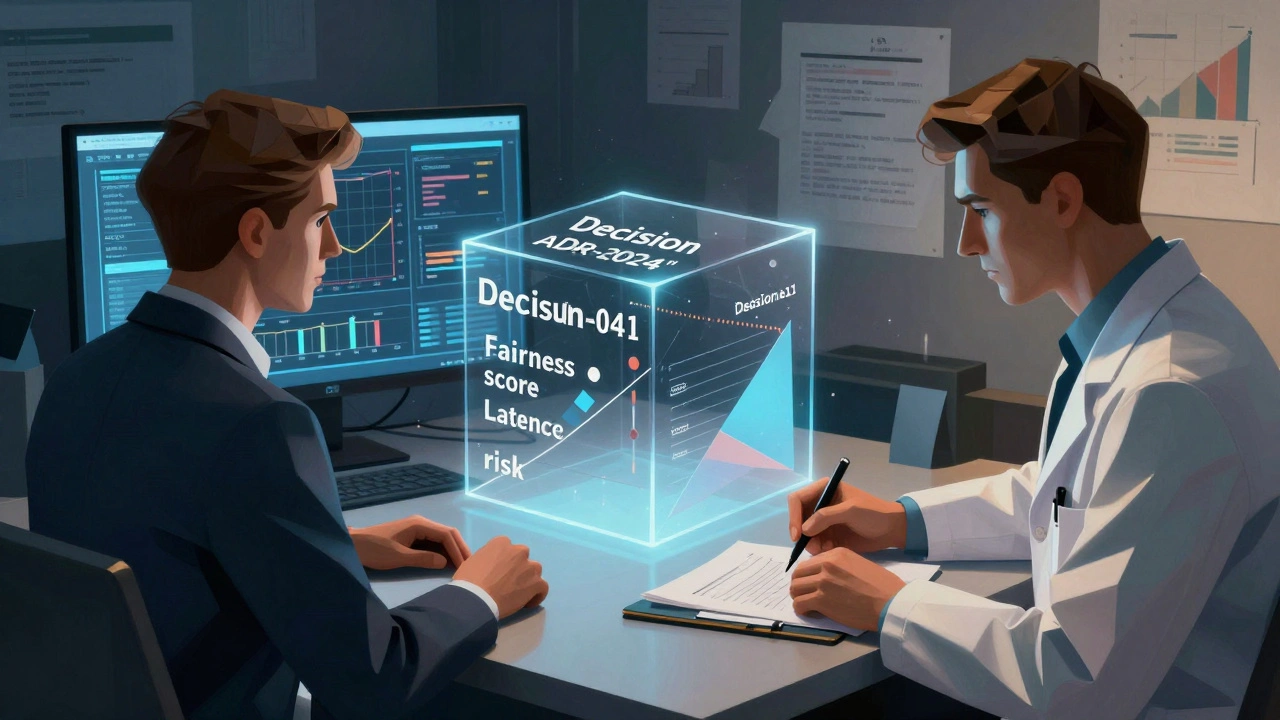
In AI, changelogs might say: “Updated model from v2.1 to v2.3 on April 5, 2024. Accuracy improved from 87.4% to 89.1% on test set X.” That’s useful. But it doesn’t tell you why v2.3 was chosen over v2.2b, which had better fairness scores. That’s where the decision log steps in: “Selected v2.3 over v2.2b despite 5.2% higher bias on gender subgroup Z because business priority was revenue lift, not equity. Ethical review flagged, documented in ADR-2024-041.”
Without both, you’re flying blind. You might fix a bug, but you won’t know if you broke something worse.
Why AI Needs Decision Logs More Than Ever
AI systems don’t follow rules like traditional software. They learn from data, adjust weights, and make predictions no one fully understands. That’s the “black box” problem. And when something goes wrong-like a hiring AI favoring male candidates or a chatbot giving dangerous medical advice-you need to trace it back.Decision logs solve this by capturing the human layer behind the algorithm. They answer:
- Who made the call?
- What alternatives were considered?
- What data or metrics supported the choice?
- What risks were acknowledged?
Microsoft’s Engineering Fundamentals Playbook (updated June 2023) treats decision logs as non-negotiable. Their format includes fields like Decision, Status, Context, Consequences, and Date. Google and AWS use similar systems. Why? Because when the EU AI Act went live in February 2025, it required full traceability for high-risk AI systems. No logs? No compliance. No compliance? Fines up to 7% of global revenue.
It’s not just regulation. It’s accountability. In May 2024, a financial AI denied thousands of loans to people in certain ZIP codes. The root cause? A decision made on February 17, 2024, to tighten risk thresholds after a small spike in defaults. That decision was logged. The team found it in 90 minutes. Without it, they’d have spent weeks guessing.
What Goes Into a Good AI Decision Log?
A strong decision log isn’t a paragraph of rambling thoughts. It’s structured. Here’s what top teams include:- Decision ID - Unique reference (e.g., ADR-2024-041)
- Timestamp - UTC precision, down to the second
- Owner - Name and role of the person accountable
- Context - What problem were you trying to solve?
- Options Considered - At least two alternatives, even if rejected
- Metrics Used - Accuracy, fairness scores, latency, user feedback
- Consequences - Short-term and long-term impacts
- Uncertainty Level - “High,” “Medium,” or “Low” confidence in outcome
- Model Version - Which AI model was affected?
- Linked Changelog - Reference to the technical change
Teams at LaunchNotes and Fellow.ai now include AI-specific fields like “Bias Detection Metric Before/After” and “Ethical Impact Score.” One healthcare AI startup used this format to get FDA approval. Their logs showed every tweak to reduce racial bias in diagnostic predictions-exactly what regulators asked for.
How Changelogs and Decision Logs Work Together
These logs aren’t rivals. They’re teammates.Changelogs live in Git repositories. They’re automated. Every time you push a new model version, your CI/CD pipeline logs it: “Deployed model v3.1.2 to staging. Dataset: training_data_2024-04-10_v2.”
Decision logs live in Notion, Confluence, or Markdown files. They’re manual. Someone has to write them. But they link back to the changelog. So when someone sees the model version changed, they can click the link and see why.
At AWS, engineers use SageMaker’s built-in integration. When a model is retrained, the system auto-generates a decision log draft based on the training parameters. The engineer just fills in the “why” and approves it. This cuts documentation time by 60%.
Teams using both logs together complete compliance audits 43% faster, according to ProjectManager.com’s 2024 study of 347 AI projects. Why? Because auditors don’t have to guess. They have a trail.
Where These Systems Fall Short
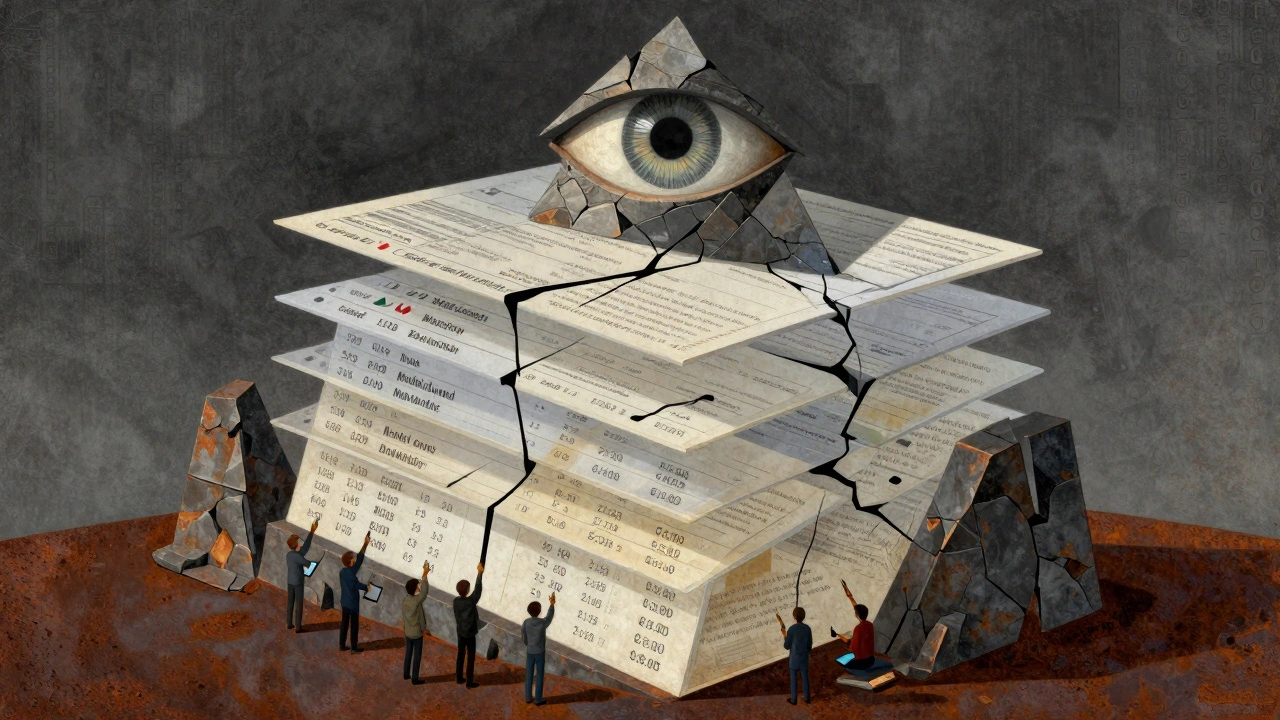
It’s not all smooth sailing.61% of AI practitioners say they struggle to keep decision logs updated, especially during fast-moving sprints. When you’re pushing three model updates a week, writing a detailed log feels like bureaucracy. One fintech team abandoned their system after it added 3.5 hours per week to each data scientist’s workload.
Integration is another pain point. If your decision log doesn’t connect to GitHub, Jira, or MLflow, it becomes a lonely file no one reads. The best teams automate the start of the log-like pulling in meeting transcripts from Slack or Zoom-and only ask humans to confirm and refine.
Also, not every decision needs a 500-word essay. For minor tweaks-like changing a learning rate from 0.001 to 0.002-a one-line note suffices. The key is consistency. If you log some decisions and ignore others, the whole system loses trust.
And then there’s the cultural barrier. Engineers aren’t trained to document reasoning. They’re trained to build. Teaching teams to think in terms of “why” instead of “what” takes time, coaching, and sometimes, leadership buy-in.
What Tools Are Actually Working?
You don’t need to build this from scratch. Here’s what teams are using in 2025:- Fellow - Best for teams using Slack and Google Calendar. Automatically creates decision log entries from meeting notes. Rated 4.7/5 by 184 users.
- LaunchNotes - Built for product teams. Integrates with Jira and GitHub. Adds AI-specific fields like bias metrics. Rated 4.5/5.
- Microsoft’s ADR Template - Free, open-source, and widely adopted. Great if you’re already in the Microsoft ecosystem. Rated 4.3/5 by enterprise users.
- Custom Markdown + Git - Still popular among startups. Lightweight, version-controlled, but requires discipline.
For enterprise teams, AWS’s new “Decision Log Insights” tool (launched November 2024) uses machine learning to spot patterns. It flagged that teams who documented uncertainty levels had 31% fewer model failures in production. That’s not magic-it’s data-driven feedback.
The Future: AI Writing Its Own Logs
The next leap isn’t better templates. It’s AI writing logs for you.Microsoft announced in October 2024 that their Engineering Playbook will soon include an AI assistant that scans Slack conversations, meeting recordings, and code comments to auto-generate draft decision logs. Google’s “Decision Copilot” prototype does the same-reading model performance drops and suggesting what to document.
Imagine this: Your model’s accuracy drops 8% after a deployment. The system pulls up the last five decisions made around that model, checks which one coincided with the drop, and says: “Decision ADR-2024-088: Changed reward function to prioritize click-through over fairness. Correlated with 7.9% accuracy loss. Recommend reverting or adding bias correction.”
This isn’t sci-fi. It’s coming. By 2026, Gartner predicts 75% of enterprise AI projects will use automated decision logging. The goal isn’t to replace humans. It’s to make their reasoning visible, repeatable, and auditable.
Where to Start Today
You don’t need a fancy tool. You need a habit.Here’s how to begin:
- Pick one AI project. Just one.
- Create a simple Markdown file:
decision-log.md. - For every major change-model update, dataset swap, threshold tweak-add a new entry using the 8 fields above.
- Assign one person to review logs weekly.
- Link each log entry to its changelog commit in Git.
Start small. Don’t try to log everything. Log the decisions that matter: those affecting fairness, safety, or revenue. After a month, ask: Did we avoid a mistake because we had this record? If yes, you’ve already won.
The best AI systems aren’t the most complex. They’re the most transparent. And transparency doesn’t come from perfect algorithms. It comes from clear, honest records of the choices behind them.
Do I need a tool to maintain decision logs, or can I use a simple file?
You don’t need a tool to start. Many teams begin with a simple Markdown file in their code repository. Tools like Fellow or LaunchNotes help scale and automate, but the core practice-documenting why decisions were made-isn’t dependent on software. The key is consistency, not complexity. If your team is small and moves slowly, a shared document works fine. If you’re deploying models daily, automation becomes necessary to avoid burnout.
How often should decision logs be updated?
Update them every time a significant decision is made-anything that changes how the AI behaves, what data it uses, or what goals it optimizes for. That could be daily in fast-moving teams, or weekly in more stable environments. Minor tweaks (like adjusting a hyperparameter) don’t always need a log entry unless they impact fairness, safety, or performance significantly. The rule of thumb: if someone might ask “Why did we do this?” six months from now, write it down.
Can decision logs help with AI bias?
Yes, and they’re one of the most effective tools for it. Bias often creeps in through unspoken trade-offs: “We used this dataset because it was easier to get,” or “We ignored gender performance gaps because accuracy was higher.” Decision logs force those trade-offs into the open. Teams that document bias metrics before and after each decision can prove they considered fairness-not just accuracy. That’s what regulators and auditors look for. In healthcare and finance, it’s often mandatory.
What’s the biggest mistake teams make with decision logs?
The biggest mistake is treating them as a compliance checkbox instead of a learning tool. If logs are only written to satisfy auditors and never reviewed by the team, they become useless. The real value is in retrospectives: “What decisions led to our biggest wins? What ones caused failures?” Teams that read their logs monthly learn faster than those that don’t. Logging isn’t about covering your back-it’s about building a smarter team.
Are decision logs required by law?
Yes, in regulated industries and under new laws like the EU AI Act (effective February 2025) and California’s SB-1047 (signed September 2024). These laws require full documentation of decisions for “high-risk” AI systems-those used in hiring, lending, healthcare, and law enforcement. Even if you’re not legally required, if you’re building AI that affects people’s lives, you’re ethically obligated to document why you made the choices you did.
Tina van Schelt
December 13, 2025 AT 19:10Finally, someone gets it. I’ve been begging my team to stop treating AI like a magic box that just ‘works’. We upgraded our loan model last quarter and had zero documentation-ended up blaming the data when it was just a dumb threshold tweak from a 3am Slack debate. Decision logs aren’t bureaucracy, they’re sanity.
Started a simple Notion doc with the 8 fields. Took 20 minutes. Saved us 3 days last week when we traced a bias spike back to a rejected alternative. Worth every second.
Ronak Khandelwal
December 15, 2025 AT 10:01❤️ This is the kind of post that makes me believe tech can still be human.
At my startup in Bangalore, we started logging decisions after a chatbot told a diabetic user to ‘drink more soda for energy’. 🤦♂️ We didn’t have a single line of documentation. Now? Every change gets a quick note, even if it’s just ‘changed threshold → because user cried’. Turns out, emotion is data too.
Tools help, but the real magic is when your team starts asking ‘why’ before ‘how’. We’re not perfect, but we’re awake now. 🌱
Jeff Napier
December 16, 2025 AT 10:58Sibusiso Ernest Masilela
December 16, 2025 AT 14:25How quaint. You all treat this like some noble engineering discipline. Newsflash: AI is not a child you document for daycare. It’s a weaponized statistical ghost trained on the internet’s vomit. You think writing ‘bias metric before/after’ makes you ethical? You’re just performing virtue signaling for auditors while your model quietly discriminates against non-English names.
Real transparency? Ban all proprietary AI. Open-source the data. Let the world see the rot. Until then, your ‘decision logs’ are just pretty lies with timestamps.
Daniel Kennedy
December 16, 2025 AT 23:52Jeff and Sibusiso-your rage is valid, but let’s not throw the baby out with the bathwater.
Yes, logs won’t fix systemic greed or bad data. But they’re the first step toward *accountability*, not just compliance. I’ve seen teams go from ‘who changed this?’ to ‘we learned from that mistake’ because they had a record.
Start small. One log per sprint. One person owns it. No fancy tools. Just a shared doc and a culture that says ‘we care why we did this’. That’s how trust rebuilds.
And yes, the system’s broken. But if we don’t document the cracks, we’ll never fix them. This isn’t about being perfect. It’s about being honest. And that’s a radical act in 2025.
TL;DR: Logs aren’t magic. But silence is deadly.