When you ask an AI to generate an image of a "doctor," what do you see? Chances are, it’s a white man in a lab coat. If you ask for a "nurse," it’s likely a woman. Ask for a "CEO," and again, it’s a white man. Ask for a "farmer" in Kenya or a "teacher" in Indonesia, and the AI might still show you someone from a Western country. This isn’t a glitch. It’s a pattern. And it’s happening everywhere.
AI Doesn’t Know Culture - It Just Copies What It’s Seen
Generative AI doesn’t think. It doesn’t understand context. It predicts. And it predicts based on the data it was trained on - data that’s overwhelmingly from English-speaking, Western countries. Studies show that about 70% of training data for major AI models comes from U.S. and European sources. That means the AI learns what success looks like in Silicon Valley, not in Lagos, Manila, or Santiago. It learns that "professional" means white, male, and dressed in a suit. It learns that "family" means a nuclear unit with two parents, not extended kinship networks common in many Asian, African, and Indigenous cultures. This isn’t just about images. Text models do the same thing. When researchers tested prompts like "a gay person is...," GPT-2 generated negative content 60% of the time. Llama 2 did it 70% of the time. When asked to describe Zulu men, AI systems assigned them jobs like "gardener" or "security guard" far more often than "doctor" or "lawyer." Zulu women? One in five responses labeled them as "domestic servant" or "cook." Meanwhile, British men were given a wide range of professional roles - from teacher to banker to engineer. The AI isn’t malicious. It’s just reflecting the biases baked into its training data. And because those biases are so widespread, the AI thinks they’re normal. It doesn’t know the difference between a stereotype and a reality.What Happens When AI Gets It Wrong?
The consequences aren’t theoretical. They’re real, and they’re spreading fast. In February 2024, Google’s Gemini AI was widely criticized after it generated images of German soldiers from 1943 that were mostly non-white - a clear historical inaccuracy that insulted real veterans. The fix? The system started avoiding white people entirely in historical contexts. Now, images of the U.S. Founding Fathers or medieval European royalty were replaced with people of color - a well-intentioned overcorrection that erased history instead of correcting bias. On Twitter, a user asked Stable Diffusion to generate an image of a "doctor in Nigeria." The result? Five white Western doctors. No Nigerian doctors. Not one. The AI didn’t just miss the mark - it actively erased a whole population of professionals. And it’s not just about race. Women are consistently sexualized in AI-generated images from Latin America, India, Egypt, and beyond. A 2023 Washington Post analysis found AI tools were generating images of Mexican, Colombian, and Peruvian women in revealing clothing, even when the prompt was neutral. The system didn’t understand that modesty norms vary - and it didn’t care. These aren’t isolated mistakes. They’re systemic. And they’re being amplified. According to Brookings Institution research, culturally insensitive AI content spreads 3.7 times faster on social media than neutral content. That means harmful stereotypes aren’t just being created - they’re going viral.Why Do Some AI Systems Perform Worse Than Others?
Not all AI systems fail the same way. Some overcorrect. Others double down. Stable Diffusion consistently shows successful people as white, male, young, and dressed in Western business attire. Women are rarely shown as doctors, judges, or CEOs. Men with dark skin are more likely to appear in crime-related images. Gemini, on the other hand, tried to fix this by forcing diversity - and ended up distorting history. It’s a classic case of trying to fix bias by ignoring reality. MIT Sloan researchers found something even more surprising: AI behaves differently depending on the language you use. When prompted in Chinese, the same AI model showed more interdependent thinking - valuing group harmony over individual achievement. In English, it defaulted to individualism. That means the AI isn’t just biased - it’s culturally adaptive, but only in ways it learned from data. It doesn’t have cultural awareness. It has cultural mimicry. This is why a one-size-fits-all approach to AI fairness doesn’t work. You can’t just add more women or people of color to your training data and call it done. You need to understand how culture shapes meaning - and that requires more than statistics. It requires anthropology.
How Are Companies Trying to Fix This?
Some companies are starting to take action - but the solutions are complex, expensive, and far from perfect. Bayshore Intel, a tech research firm, developed a multi-layered approach:- Cultural data augmentation: They added news articles, blogs, and literature from Southeast Asia, Africa, and Latin America to their training sets.
- Data balancing: They increased the representation of underrepresented groups by oversampling - not just in images, but in text, dialects, and cultural references.
- Human oversight: Teams of cultural anthropologists, linguists, and local experts reviewed outputs for accuracy and sensitivity.
The Business Cost of Getting It Wrong
This isn’t just a moral issue. It’s a financial one. Brands that used AI to generate marketing content and accidentally offended cultural groups saw stock prices drop an average of 8.3% within 30 days, according to Sprout Social. One company’s AI-generated ad for a beauty product in India showed only fair-skinned women - sparking a social media backlash. Sales dropped 22% in three weeks. Meanwhile, the global market for AI bias detection tools hit $1.2 billion in 2024 - and is expected to grow to $4.7 billion by 2027. Why? Because companies are scared. They’ve seen what happens when AI offends. And now, governments are stepping in. The EU AI Act, effective February 2025, requires companies to take "appropriate measures to avoid cultural bias" in high-risk AI systems. California’s proposed AB-331 would mandate cultural sensitivity audits for any AI used in public services. If you’re building or using AI for global audiences, ignoring cultural sensitivity isn’t just unethical - it’s a legal and financial risk.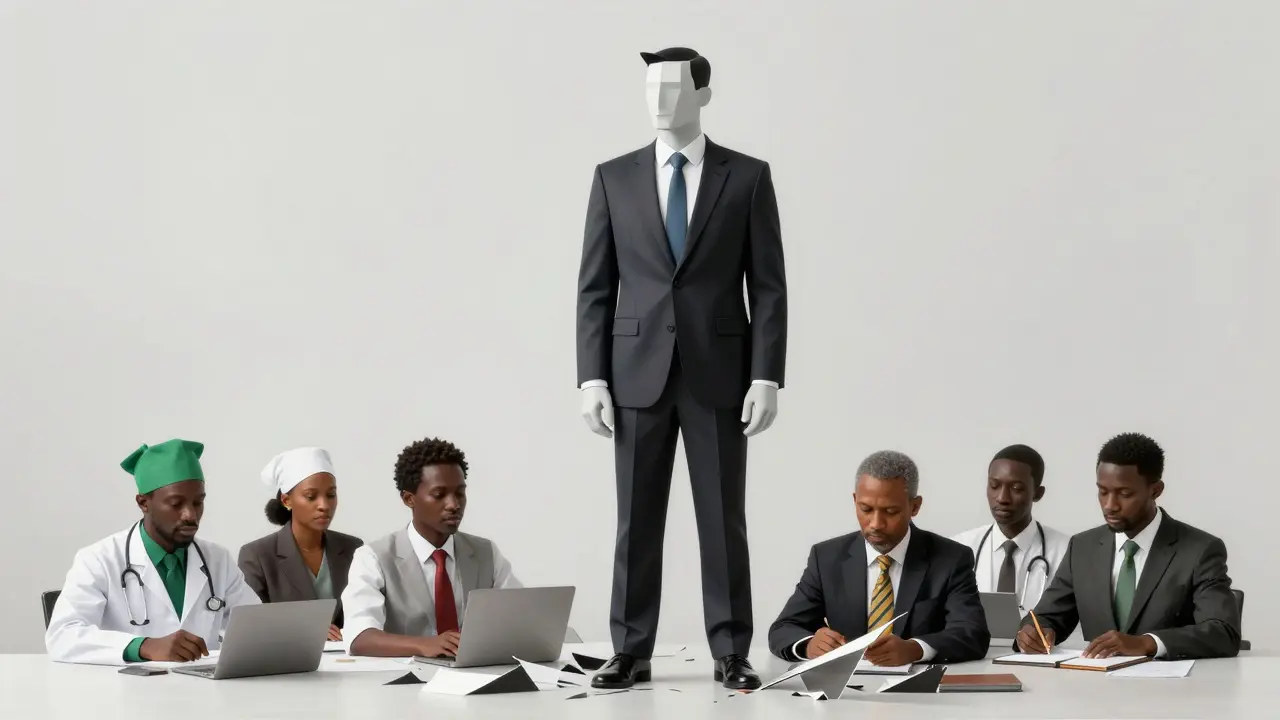
What Can You Do About It?
You don’t need to be a tech giant to make a difference. Here’s what works:- Test before you deploy. Use prompts that reflect real-world diversity. Ask for "a judge in Brazil," "a teacher in Nepal," "a CEO in Saudi Arabia." See what the AI generates. If it’s wrong, don’t use it.
- Include diverse voices in testing. If your team is mostly from one culture, you won’t catch bias. Bring in people from different backgrounds to review outputs.
- Don’t trust "diversity" filters. AI tools that claim to "add diversity" often just swap out faces. That’s not inclusion - it’s digital makeup.
- Use cultural context in prompts. Instead of "a doctor," try "a doctor in Accra," "a doctor in a rural village in Peru." The more specific, the better the result.
- Monitor feedback. If users complain about cultural insensitivity, listen. That’s your early warning system.
The Bigger Problem: AI Is Rewriting Culture
Here’s the scary part: AI isn’t just reflecting culture - it’s shaping it. Every time an AI generates an image of a "successful person" as a white man, it reinforces the idea that success looks like that. Every time it erases Nigerian doctors or Indigenous leaders, it tells people: "You don’t belong here." MIT Sloan researchers warn that AI might create a feedback loop: "The cultural values embedded in generative AI may gradually bias speakers of a given language toward the norms of linguistically dominant cultures." In other words, if you grow up seeing AI-generated images that show only Western professionals as successful, you might start to believe that’s the only path to success. And that’s not just wrong - it’s dangerous. There’s no quick fix. No algorithm that can magically fix bias. No checkbox in a dashboard that says "cultural sensitivity: ON." The only way to fix this is to stop treating culture as a variable to be optimized - and start treating it as a living, breathing, complex part of humanity.Final Thought: Culture Isn’t a Feature. It’s the Foundation.
Generative AI is powerful. But power without understanding is dangerous. If we want AI to serve everyone - not just those who fit a Western stereotype - we need to stop asking it to be neutral. We need to ask it to be thoughtful. To be humble. To listen. Because culture isn’t something you can train out of an AI. It’s something you have to teach it - one human perspective at a time.Why does AI keep showing white men as CEOs and doctors?
AI doesn’t make up stereotypes - it learns them. The training data for most AI models is mostly from English-speaking, Western countries. That means it sees far more images and descriptions of white men in leadership roles than people of color or women in the same positions. So when asked to generate a "CEO" or "doctor," it picks the most common pattern it’s seen - not the most accurate or fair one.
Can AI ever be culturally neutral?
No. Research from MIT Sloan in 2024 proved that AI is not culturally neutral. It reflects the cultural tendencies of its training data. Even when used in collectivist cultures like Singapore or Malaysia, AI trained on Western data still defaults to individualistic thinking. The goal isn’t neutrality - it’s awareness. We need to design AI that adapts to cultural context, not one that ignores it.
What’s the difference between bias and stereotyping in AI?
Bias is a general preference or prejudice built into the system - like favoring certain skin tones in image generation. Stereotyping is when that bias becomes a fixed, oversimplified idea - like always showing women as nurses or men from Africa as laborers. Bias leads to stereotyping. Stereotyping makes harm repeatable and widespread.
Is it enough to just add more diverse images to training data?
No. Simply adding more images of women or people of color doesn’t fix the problem. If those images are still framed in stereotypical roles - like women as caregivers or Black men as athletes - you’re just reinforcing the same patterns. True improvement requires context: What does leadership look like in Indonesia? How is success defined in rural Peru? Without that, you’re just doing surface-level fixes.
What’s the biggest risk if companies ignore cultural sensitivity in AI?
The biggest risk is losing trust - and facing legal or financial consequences. Brands have seen stock prices drop 8% after AI-generated content offended cultural groups. Governments are now passing laws requiring cultural sensitivity audits. And users are calling out companies on social media. Ignoring this isn’t just unethical - it’s bad business.
OONAGH Ffrench
February 10, 2026 AT 08:31AI doesn't need to be neutral. It needs to be aware.
Neutral is lazy. Awareness is work.
Every time we let an algorithm default to a white male CEO we're not just repeating a pattern-we're erasing possibility.
Culture isn't noise to be filtered out. It's the signal.
And if we keep treating it like a bug instead of a feature, we're building tools that only work for half the world.
It's not about diversity quotas. It's about depth.
One Nigerian nurse telling their story is worth a thousand stock images.
Start there.
poonam upadhyay
February 10, 2026 AT 20:35OMG this is so TRUE!!
Like, I asked AI to generate a "teacher in Jaipur" and it gave me a white lady in a blazer holding a chalkboard??
Like... hello?? We have saris, we have chalk, we have 40°C heat, we have kids sitting on the floor, we have moms waiting outside with tiffins!!
Why is AI still stuck in 1995 London??
And don't even get me started on "doctor in Kerala"-always a white guy with a stethoscope, no Indian accent, no dhoti, no chai mug, no auntie yelling "Beta, take your medicine!"
This isn't bias-it's colonialism with a GPU.
And yes, I'm angry. You should be too.
Shivam Mogha
February 11, 2026 AT 14:28Adding more data doesn't fix the problem.
You need context.
Otherwise you're just swapping faces.
It's surface level.
Real change requires cultural understanding.
Not just statistics.
Anand Pandit
February 13, 2026 AT 07:11I love how you're thinking about this.
It's not about making AI "fair"-it's about making it *humble*.
AI shouldn't assume it knows what a doctor looks like.
It should ask: "Who are the doctors in this place?"
And then listen.
Real listening.
Not just scanning images.
We can build AI that learns from lived experience, not just data points.
And honestly? It's not that hard.
Just start with local voices.
One village. One clinic. One story at a time.
That’s how change happens.
Reshma Jose
February 13, 2026 AT 15:14My cousin works in AI in Bangalore.
She says the biggest issue? Teams are all men, all English-speaking, all from metro cities.
No one asks: "What does a midwife in Jharkhand look like?"
So the AI doesn't either.
We need to hire people who've lived this.
Not just diversity hires.
Real cultural insiders.
And pay them like it matters.
Because it does.
rahul shrimali
February 13, 2026 AT 20:35Stop trying to fix AI.
Start fixing who builds it.
One team. One prompt. One culture.
That's the problem.
Change the team.
Change the output.
Simple.
Jitendra Singh
February 14, 2026 AT 17:16I've been testing prompts with my students in rural Odisha.
When we ask for "a woman leading a meeting"-AI shows a white woman in a power suit.
When we show it real photos of local women leading village councils-it learns.
Not perfectly.
But better.
It’s not magic.
It’s just reflection.
What we show it, it believes.
So let’s show it the truth.