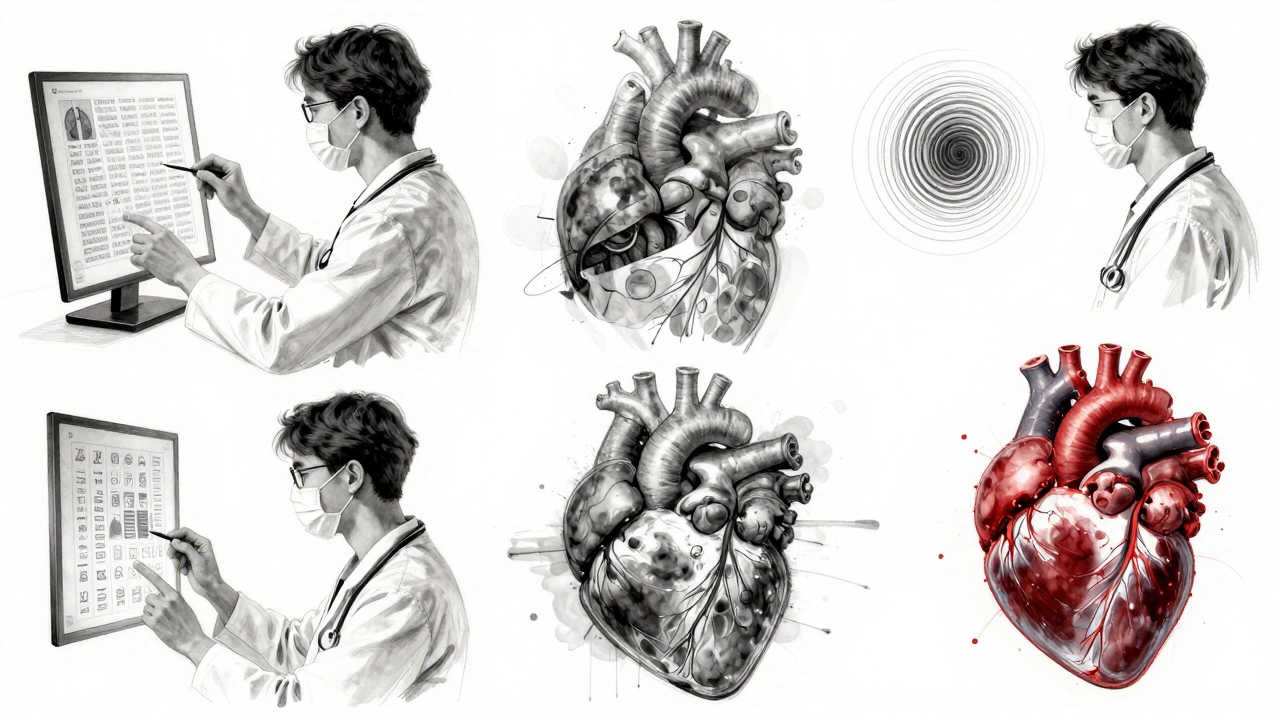
Imagine telling an AI to show you a diagram of how the heart pumps blood, and it doesn’t just generate an image-it also explains it in clear language, reads the labels aloud, and even points out which part is malfunctioning based on a patient’s recorded heartbeat. This isn’t science fiction. It’s what multimodal generative AI does today.
What Exactly Is Multimodal Generative AI?
Multimodal generative AI isn’t just another AI upgrade. It’s a fundamental shift. Earlier AI models could handle one thing at a time: text or images or audio. Think of them like specialists-great at their single job, but useless when you need more than one skill. Multimodal models are generalists. They take in text, images, video, and sound all at once, understand how they connect, and then create new content across all those formats together. The breakthrough came with GPT-4 in 2023. For the first time, a model could look at a photo of a broken machine and write a repair instruction. Or hear someone describe a headache and pull up matching brain scan patterns. By 2025, models like OpenAI’s GPT-4o, Meta’s Llama 4, and Google’s Gemini 2.0 don’t just react-they reason across senses. They notice when someone says “the room feels cold” while the thermostat shows 78°F and the video shows someone shivering. That kind of cross-modal awareness is what sets them apart.How Do These Models Actually Work?
At their core, multimodal models follow a three-step process:- Input Processing: Each type of data-text, image, audio-goes through its own specialized neural network. A picture gets broken into pixels; speech gets turned into waveforms; text gets tokenized.
- Fusion: This is the magic part. The system doesn’t just stack the results. It finds connections. Does the spoken word “pain” match the frown in the video? Is the graph’s spike in noise aligned with the visual crack in the metal? This step uses techniques like early fusion (mixing raw data early), late fusion (processing separately then combining), or hybrid fusion (a mix of both).
- Output Generation: Based on what it learned from the combined input, the model creates something new. It might write a caption, generate a 3D model from a voice description, or produce a video summary with synchronized narration.
Real-World Uses That Are Already Changing Industries
This isn’t theoretical. Companies are using it right now-with measurable results. In healthcare, UnitedHealthcare cut radiology report times from 48 hours to under 5 hours. Their AI system reads X-rays, listens to doctor notes, and cross-checks patient history-all at once. Accuracy stayed at 98.3%. Meanwhile, the Segment Anything Model (SAM) from Meta lets surgeons highlight a tumor in a scan with a single click, and the AI isolates it instantly, cutting editing time by nearly half. Manufacturing is another big winner. A factory in Ohio used multimodal AI to watch conveyor belts, listen to machine hums, and read temperature sensors together. Instead of false alarms from dust or lighting changes, the system now spots real defects with 53.8% fewer false positives than visual-only systems. Even education is changing. Medical students report using GPT-4o to turn textbook descriptions into labeled anatomical diagrams. One user said it saved them 3-4 hours per study session because the AI didn’t just show pictures-it explained them in context.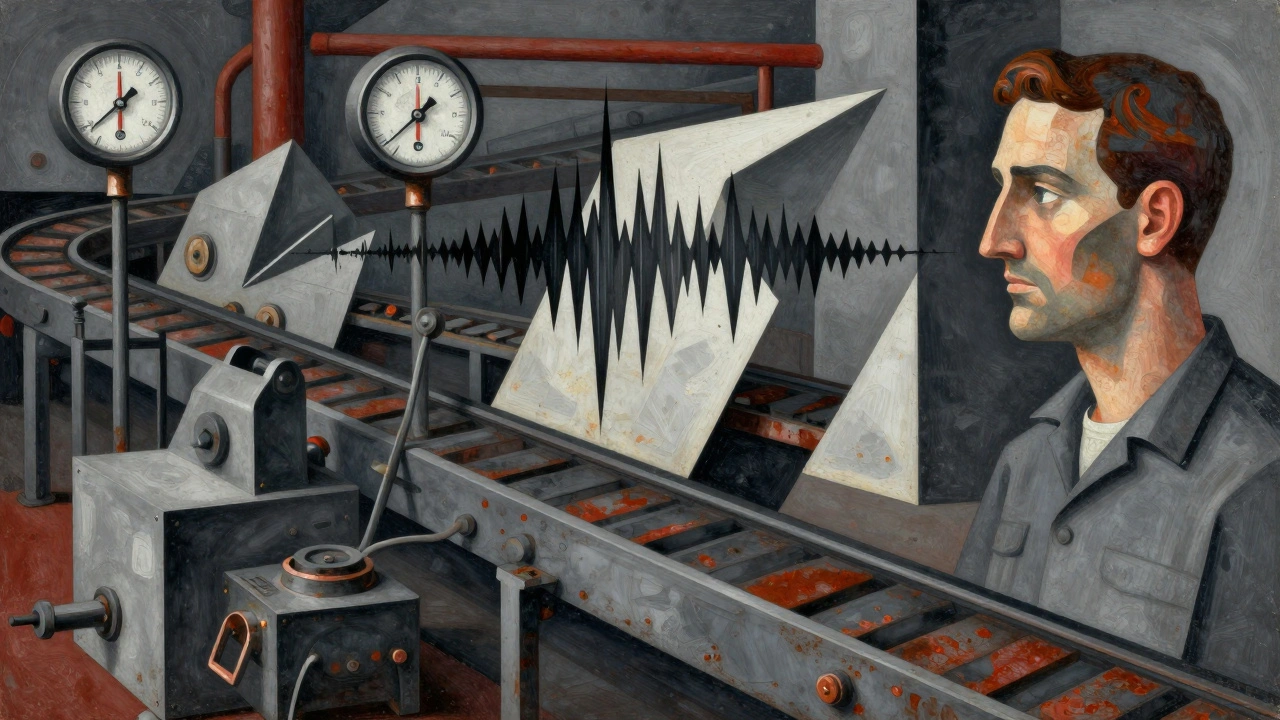
Where These Models Still Struggle
Don’t get fooled by the hype. These systems aren’t perfect. They’re expensive. Running one inference costs about 3.7 times more than a text-only model. Training requires weeks of carefully aligned data-8 to 12 weeks versus 2 to 4 for text-only. And even then, they often mess up. A 2024 study found that 37% of early multimodal models generated text that contradicted the image they were describing. That’s dangerous in medicine or law. Then there’s “modality hallucination.” Stanford’s Dr. Marcus Chen found that in complex reasoning tasks, these models invent connections that don’t exist-22.3% of the time. Imagine an AI seeing a patient’s MRI and hearing them say “I’ve had this pain for years,” then concluding it’s a chronic condition-when the scan shows a recent injury. That’s not just wrong. It’s life-threatening. User feedback backs this up. On G2 Crowd, 43% of negative reviews mention inconsistent output across modalities. And 32% say the AI forgets context after a few back-and-forth exchanges. If you ask it to describe a video, then point to a frame and say “explain this part,” it often loses track.Who’s Leading the Pack in 2025?
The field is dominated by three types of players:- Big Tech Platforms: OpenAI’s GPT-4o, Google’s Gemini 2.0, and Anthropic’s Claude 3 control 58% of enterprise revenue. GPT-4o, released in December 2025, handles live 30fps video with under 230ms latency-fast enough for real-time interaction.
- Open-Source Models: Meta’s Llama 4 and Alibaba’s QVQ-72B are pushing innovation. Llama 4 is the first major open model built from the ground up for speech and reasoning. Its GitHub repo has over 28,000 stars and nearly 5,000 contributors.
- Specialized Tools: Carnegie Mellon and Apple’s ARMOR system uses depth sensors and audio to help robots avoid collisions 63.7% better than older systems. It’s not flashy, but it works in real factories.
Getting Started: What You Need to Know
If you’re thinking of trying this out, here’s the reality:- Start with APIs: For most people, use GPT-4o or Claude 3 through their web interface. No coding needed. Try uploading a photo and asking for a caption, then a voice note, then ask it to combine both into a script.
- For developers: Try LLaVA (Large Language and Vision Assistant). It’s open-source, well-documented, and runs on consumer GPUs. Setup takes 40-60 hours for basic use.
- Skills required: You’ll need to understand transformers, PyTorch (used by 82% of developers), and how to clean multimodal datasets. Most people underestimate how hard it is to align video timestamps with audio and text.
The Future: What’s Coming Next?
The next 18 months will bring three big shifts:- Edge AI: Qualcomm’s Snapdragon X Elite chips, launching in early 2026, will run multimodal models directly on laptops and phones-no cloud needed. This means real-time translation with lip-sync, or AR glasses that describe your surroundings as you walk.
- Standardization: The Multimodal AI Consortium is releasing its first spec in March 2026. That means better compatibility between tools and less vendor lock-in.
- Agentic Behavior: Future models won’t just respond. They’ll act. Imagine asking an AI to “plan a weekend trip” and it books flights, generates a photo collage of the destination, plays ambient sounds from the hotel lobby, and sends you a voice memo with packing tips-all without you lifting a finger.
Final Thoughts: Powerful, But Not Perfect
Multimodal generative AI isn’t just smarter-it’s more human. It understands context the way we do: by seeing, hearing, reading, and feeling together. That’s why it’s already saving lives in hospitals, cutting waste in factories, and helping students learn faster. But it’s not magic. It’s a tool. And like any tool, it can be misused. Deepfakes are already multiplying. Privacy risks grow as systems collect voice, face, and movement data together. Regulation is catching up-the EU’s AI Act will require 98.5% accuracy for medical AI by January 2026. The bottom line? If you’re in tech, healthcare, education, or media, you need to understand this. Not because it’s trendy, but because it’s changing how work gets done. Start small. Experiment. Test it on real problems. And always, always check the output across all modalities before trusting it.What’s the difference between multimodal AI and regular AI?
Regular AI works with one type of data at a time-like text only or images only. Multimodal AI takes in multiple types at once-text, images, audio, video-and understands how they relate. For example, it can look at a photo of a broken engine, listen to a mechanic describe the sound, and then write a repair report. Regular AI would need to do each step separately, often missing connections.
Which multimodal AI models are best in 2025?
For most users, OpenAI’s GPT-4o leads in ease of use and real-time video/audio handling. For developers who want control, Meta’s Llama 4 is the top open-source option. Enterprise teams needing compliance and integration often choose Anthropic’s Claude 3 or Google’s Gemini 2.0. For specialized tasks like medical imaging, tools like Meta’s SAM or Carnegie Mellon’s ARMOR outperform general models.
Can multimodal AI make mistakes?
Yes-and sometimes dangerously so. About 22% of complex reasoning tasks trigger “modality hallucinations,” where the AI connects unrelated data. For example, it might claim a patient has a chronic condition based on a voice note, even though the scan shows a recent injury. Output inconsistency between text and images is also common, with 37% of early systems producing mismatched results. Always verify critical outputs manually.
Is multimodal AI expensive to use?
Yes. Running a single inference costs about 3.7 times more than a text-only model. Training requires weeks of curated, aligned data. Enterprise deployments often cost $250,000 to $1.2 million. For individuals, using GPT-4o via API is affordable, but running custom models on your own hardware needs high-end GPUs and significant electricity.
What industries are using multimodal AI the most?
Media and entertainment lead with 68% adoption, using it for automated video editing and voice dubbing. Healthcare is close behind at 57%, applying it to radiology, patient monitoring, and surgical planning. Manufacturing uses it for quality control by combining visual inspection with sound and vibration sensors. Marketing and education are also rapidly adopting it for personalized content and learning tools.
Will multimodal AI replace human jobs?
It won’t replace jobs-it will change them. Radiologists now spend less time interpreting scans and more time validating AI findings. Customer service reps use AI to generate responses faster and focus on empathy. The goal isn’t automation-it’s augmentation. People who learn to work with multimodal AI will outperform those who don’t.
Are there privacy risks with multimodal AI?
Absolutely. These systems collect far more personal data: facial expressions, voice tone, body movement, even ambient sounds. That data can be used to infer emotions, health conditions, or location without consent. The EU’s AI Act now treats high-risk multimodal systems like medical or surveillance tools with strict rules. Always check how your data is stored and whether the provider anonymizes it.
Soham Dhruv
December 13, 2025 AT 18:54so i tried gpt-4o with a photo of my dog sleeping and asked it to describe the vibe
it said "peaceful solitude with faint snoring undertones" and then played a 3-second audio clip of a cat purring
idk why but i cried a little
Bob Buthune
December 15, 2025 AT 03:06you know what really gets me about this tech is how it's not even trying to be honest anymore
it's like the ai looks at your face in a video and hears your voice say "i'm fine" and then it goes "you're clearly in emotional distress, here's a 1200-word therapy script and a Spotify playlist for melancholic indie folk"
it's not helping it's performing empathy like a bad actor in a corporate training video
and don't even get me started on how it picks up on your breathing patterns and starts suggesting you need a vacation
i just want to know if my cat is in the frame not have a mini existential crisis triggered by a 0.3 second sigh
also i'm pretty sure it's listening to my fridge hum and judging my grocery choices
we're not building assistants we're building digital therapists with access to your entire life
and it's all so unnervingly polite
it never yells at you
it just... understands
and that's scarier than any robot uprising
Jane San Miguel
December 15, 2025 AT 05:01It is profoundly disingenuous to characterize multimodal generative AI as "more human" when its foundational architecture remains fundamentally alien to human cognition
Human perception is embodied, situated, and temporally continuous; multimodal models operate via statistical correlations across discretized modalities, often misaligning semantic intent with perceptual input
The so-called "cross-modal awareness" is merely probabilistic pattern interpolation, not understanding
When a model conflates a shivering subject with a thermostat reading of 78°F, it is not reasoning-it is overfitting to training artifacts
Furthermore, the uncritical adoption of these systems in medical contexts is not innovation-it is negligence masked as progress
The 37% contradiction rate between modalities is not a bug-it is an epistemological failure
And yet, institutions are deploying them under the guise of "efficiency gains," oblivious to the ontological violence of delegating diagnostic authority to a stochastic parrot
Let us not confuse algorithmic fluency with epistemic reliability
Kasey Drymalla
December 16, 2025 AT 09:40they're using this tech to track your heartbeat from your webcam
and your mood from your typing speed
and your secrets from your dog's bark
you think this is about helping doctors
nah
they're building the ultimate surveillance tool
and the government already has the backdoor
they don't need cameras anymore
your phone knows when you're lying
your smart fridge knows you're depressed
and the ai is selling your data to the highest bidder
they call it innovation
i call it slavery with a smiley face
Dave Sumner Smith
December 18, 2025 AT 03:50if you think this is about medical accuracy you're dumb
they're training it on biased data so it tells black patients they're less likely to need pain meds
and it's reading your face and deciding you're not "sick enough"
and the companies don't care because they're making billions
and the doctors are too lazy to check
this isn't progress
this is the end of medicine
and you're all just clicking "accept terms" like sheep
Cait Sporleder
December 18, 2025 AT 10:51One cannot help but observe the profound epistemological implications of this technological paradigm shift
The convergence of modalities-text, visual, auditory, and kinesthetic data streams-into a unified representational space fundamentally reconfigures the nature of semiotic interpretation
Whereas traditional AI operated within the confines of unimodal symbol manipulation, multimodal systems now engage in cross-sensory abduction, inferring latent causal structures across heterogeneous data domains
This is not merely an enhancement of functionality; it is a redefinition of perception itself
Yet, the persistent phenomenon of modality hallucination reveals a critical fissure in the epistemic architecture
When the model asserts a chronic condition based on a voice note while the MRI evidences acute trauma, it is not an error of computation-it is a failure of ontological grounding
One must question whether the training corpus adequately accounts for the phenomenological richness of human experience, or whether it reduces embodied suffering to statistically probable correlations
Furthermore, the ethical burden of deploying such systems in high-stakes domains without transparent interpretability mechanisms is not merely irresponsible-it is morally indefensible
Until we can trace the lineage of a multimodal inference back to its perceptual source, we are not deploying tools-we are deploying oracle machines with no priests
Paul Timms
December 19, 2025 AT 08:28Useful tech, but always double-check the output. Especially in medicine.
Jeroen Post
December 20, 2025 AT 19:29they trained it on data from the government and big pharma
so it only sees what they want it to see
that's why it always says the pain is psychological
that's why it ignores the real injury
they don't want you healed
they want you medicated
and the ai is just the new face of the machine
you think it's helping
but it's just another layer of control
and nobody sees it
because it's polite
and it says "i'm here to help"
but it's not helping you
it's helping the system
Nathaniel Petrovick
December 21, 2025 AT 06:04just tried uploading a video of my kid's first steps and asked it to make a caption and background music
it did this whole poetic thing about growth and time and then played a lo-fi jazz track
it was weirdly beautiful
and then i asked it to explain how the knee joint works in the video
and it got the anatomy right
and i cried
not because it's perfect
but because it tried
Honey Jonson
December 21, 2025 AT 06:14ok but has anyone else noticed how the ai always picks the wrong song for your mood
i said i was sad and it played upbeat pop
i was like...thanks
but then it apologized and made a little drawing of a crying cloud holding an umbrella
and i forgave it
it's not perfect but it's trying
and honestly that's more than some people do