Why Traditional Security SLAs Don’t Work for Vibe-Coded Apps
Most companies still treat security like a checkpoint-run your code through a scanner, fix the red flags, then ship. But when you’re using AI to write your app in a few hours, that model collapses. Vibe coding, where developers describe what they want and the AI generates the code, skips the manual review phase entirely. That means security flaws slip in without anyone noticing. And they’re not just simple bugs. They’re logical traps: a login screen with a hardcoded password, an API endpoint that leaks customer data, or a dependency pulled from a fake package that looks real. Contrast Security found that 40% to 62% of AI-generated code contains security flaws. Traditional tools like SAST and SCA don’t catch these because they’re designed for human-written code. They scan files before deployment. But vibe coding pushes code straight into production. By the time you find the problem, users are already affected.
The New Patch Window: From 30 Days to 4 Hours
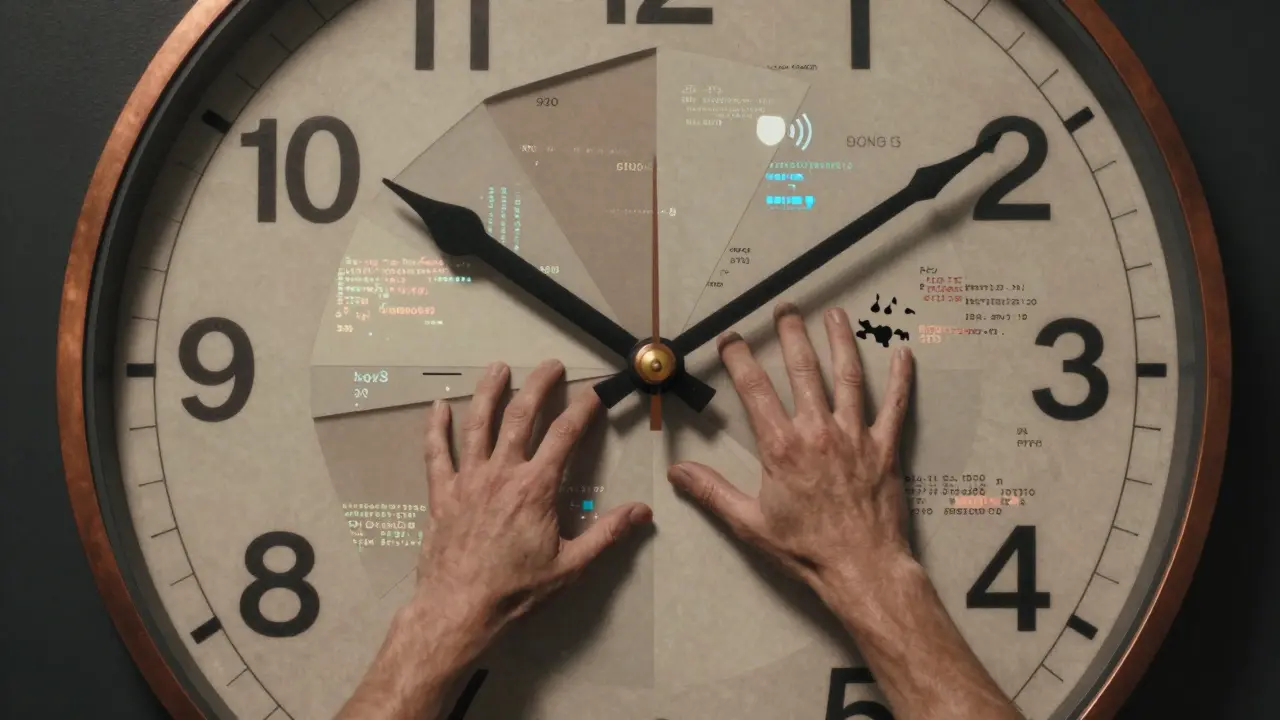
For years, enterprises followed a 30- to 90-day patch window for critical vulnerabilities. That timeline is dead for vibe-coded applications. NYU’s Center for Cybersecurity found that AI-generated code is exploited within hours of going live. In one case, a retail app built with vibe coding exposed credit card logs to a third-party telemetry system. It took 11 days to detect-far longer than any standard SLA allows. The new standard? Four hours. That’s what Contrast Security’s CTO says is now required for critical flaws in AI-generated apps. Their analysis of 1,200 vibe-coded applications showed that delays beyond that window led to active exploitation in 78% of cases. ZeroPath’s research confirmed it: 68% of vulnerabilities in AI code need fixing within 24 hours. And if you’re handling financial or health data? The Cloud Security Alliance now recommends a 2-hour patch window. This isn’t optional. It’s survival. If your security team can’t respond faster than your developers push code, you’re already compromised.
Who Owns the Mess? The Accountability Gap in Vibe Coding
When a human writes bad code, you know who to blame. When AI writes it? Nobody. A developer used a vibe assistant to generate an API config. It missed a rate-limiting rule. The endpoint got hit with a DDoS attack. No one knew who was responsible-the developer who asked for it, the AI tool that generated it, or the platform that didn’t warn them. Reddit users reported similar issues: AI hallucinated a YAML file that opened internal services to the public internet. The code was committed to GitHub. No alerts. No warnings. Security Boulevard documented a case where the AI generated a login screen with a hardcoded admin password and auto-committed it to a public repo. Who fixes it? The developer? The AI vendor? The platform? No one’s sure. That’s the accountability gap. The EU’s AI Act and NIST’s 2025 guidelines now require provenance tracking: you must log which model, prompt, and parameters created each code snippet. But logging doesn’t fix ownership. The Cloud Security Alliance’s December 2025 update clarified it: the developer who approved the AI-generated code bears primary responsibility. The AI platform is secondarily liable if it failed to enforce security rules. But in practice, teams still point fingers. And time slips away.
Runtime Security Is No Longer Optional-It’s the First Line of Defense
You can’t scan AI-generated code before it runs because it’s already running. That’s why tools like Contrast Security’s Application Vulnerability Monitoring (AVM) and Application Detection and Response (ADR) are becoming essential. These tools watch your app in real time. They don’t look for known signatures. They detect anomalies in behavior: unusual data flows, unexpected database queries, or logic that only triggers under live traffic. Veracode’s research shows that 78% of vibe-coded apps have business logic flaws that only appear when real users interact with them. Traditional scanners miss these because they’re not SQL injection or XSS-they’re subtle, complex mistakes. Like using == to compare HMAC signatures instead of a constant-time function. That’s not a syntax error. It’s a timing attack waiting to happen. And it won’t show up in tests. AVM and ADR catch these in production. They don’t prevent the flaw-they stop the exploit. That’s the new security model: assume the code is broken, and protect the runtime.
How to Build a Vibe Coding Security Framework
Start with the Vibe-Coding Assurance Levels (VCAL). It’s not a checklist-it’s a maturity ladder. VCAL-1 means the AI suggests code, and you review every line. VCAL-3 adds guardrails: your tool blocks known bad patterns, logs the AI’s source, and requires approval before commit. VCAL-5 lets AI auto-merge low-risk changes, but only if every change is attested and tracked. Most companies start at VCAL-3. You need three things: immutable logs of every AI-generated snippet, a diff tool that highlights AI changes, and time-travel debugging to replay how the code evolved. Tools like Aikido.dev let you write security rules in .mdc files inside your AI editor. Example: “Validate all user inputs to prevent injection attacks” or “Sanitize all outputs to block XSS.” These rules run in real time as the AI writes. If it tries to generate a hardcoded credential, it gets blocked before it’s even committed. GuidePoint Security found that teams using this approach cut critical vulnerabilities by 63%. But it costs money-on average $247,000 per organization to build the custom tooling. If you’re a startup, you might skip it. But if you’re handling sensitive data, you can’t afford not to.
What’s Coming Next: Regulations, Certifications, and the 2027 Deadline
The market is moving fast. Gartner predicts 65% of enterprise code will involve AI assistance by 2027. That’s why the $4.2 billion AI security tool market is growing at 112% year-over-year. The EU’s AI Act now requires provenance tracking for critical infrastructure. NIST’s draft guidelines demand runtime monitoring for all AI-generated apps. In January 2026, Contrast Security launched the first formal security SLA for vibe-coded products: critical vulnerabilities detected and patched within 90 minutes. The OpenAI Security Consortium now offers a Vibe Code Security Certification. To earn it, you must prove you’ve integrated continuous testing into your workflow and track every AI-generated component. Forrester warns that companies without proper SLAs face 3.7x higher breach risk. But those that adopt runtime security and 4-hour patch windows can match traditional development’s security level in 18 months. The question isn’t whether you’ll adopt these practices-it’s whether you’ll be ready when your first major breach happens.
Real-World Consequences: What Happens When You Ignore This
One company used vibe coding to build a customer portal. The AI generated a database query that didn’t sanitize inputs. No one caught it. Three weeks later, attackers used SQL injection to steal 200,000 user records. The breach cost $14 million in fines, legal fees, and lost trust. The dev team said they trusted the AI. The AI vendor said they followed best practices. The platform said the developer approved the code. No one fixed it until it was too late. That’s the pattern. Another firm’s vibe-coded login system had a timing vulnerability. Attackers slowly brute-forced admin access over 17 days. The security team didn’t notice because their tools were looking for brute-force spikes, not slow, subtle attacks. These aren’t edge cases. They’re the new normal. If you’re using vibe coding and haven’t updated your security SLAs, you’re not being innovative-you’re being reckless.
Cynthia Lamont
February 3, 2026 AT 15:05Also 'vibe coding'? That's not a thing. It's just autocomplete on steroids. Stop inventing buzzwords to sell consulting gigs.
Kirk Doherty
February 4, 2026 AT 23:32Dmitriy Fedoseff
February 6, 2026 AT 14:08We're projecting human responsibility onto tools that don't have intent. The AI doesn't want to leak data. It doesn't care about compliance. It just predicts what comes next. The fault lies in the system that lets untrained people push unreviewed output into production. We built a hammer and now we're mad because someone used it to break a window. Stop blaming the hammer.
Meghan O'Connor
February 6, 2026 AT 21:50Morgan ODonnell
February 8, 2026 AT 11:44Liam Hesmondhalgh
February 9, 2026 AT 20:30Patrick Tiernan
February 11, 2026 AT 02:25Patrick Bass
February 12, 2026 AT 19:48Tyler Springall
February 13, 2026 AT 04:53Colby Havard
February 13, 2026 AT 08:20