When a large language model (LLM) starts giving biased answers to job applicants, misdiagnosing patients based on race, or refusing to help non-native speakers because it "doesn't understand their dialect," the problem isn't just technical. It's human. And fixing it isn't about tweaking code - it's about listening to the people who live with the consequences. That's where stakeholder review processes come in. These aren't checklists or compliance forms. They're structured, ongoing conversations with everyone affected by an AI system - from patients and teachers to customer service reps and marginalized communities. By 2025, organizations using these processes saw 42% fewer ethical incidents, according to an arXiv review, and 63% reported higher trust from users. But most still get it wrong.
What Stakeholder Review Actually Means
A stakeholder review process isn’t just asking a few people for feedback. It’s about identifying every group impacted by an LLM - not just users, but the ones who never get to speak up. That includes people in rural areas with poor internet, workers whose jobs are being automated, or communities historically excluded from tech design. The SKIG framework, developed in 2024 and now widely referenced, starts with stakeholder identification: mapping out who’s affected, not just who’s loud. This isn’t guesswork. Tools like the Social Chemistry 101 dataset help simulate real-world interactions across 15+ demographic and cultural dimensions, with 92% accuracy in predicting who’ll be harmed.The Four Phases That Make It Work
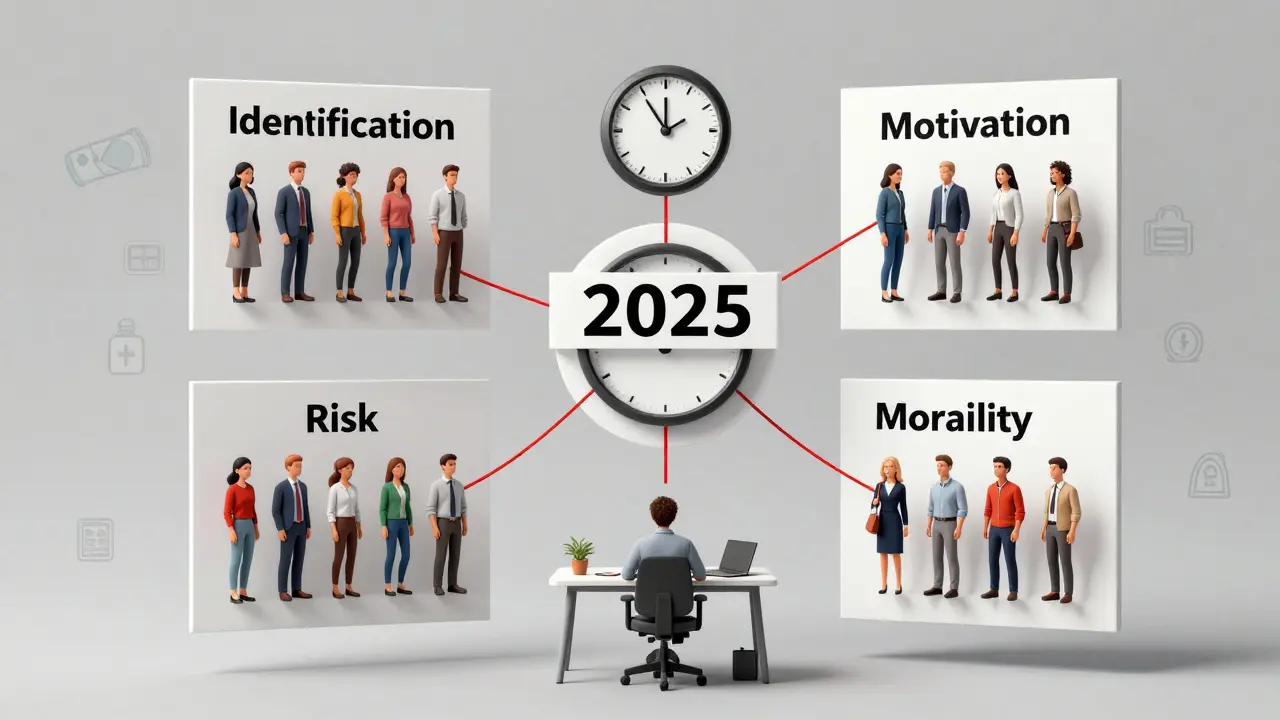
Effective stakeholder reviews follow a clear structure. The ACL Anthology’s SKIG model breaks it into four phases:- Stakeholder Identification - List everyone affected. Not just customers. Think: janitors whose cleaning robots now monitor them, teachers whose lesson plans are rewritten by AI, or elderly users who can’t navigate voice interfaces.
- Motivation Analysis - Why does each group care? A hospital administrator wants efficiency. A patient wants dignity. A coder wants to ship fast. These goals often clash. The review process forces those conflicts into the open.
- Risk Assessment - What happens if this model fails? Best-case? Worst-case? A loan approval model might work perfectly for urban professionals but deny credit to 17% of rural applicants because training data skipped them. Simulations can run 15.7 scenarios per minute to uncover these blind spots.
- Morality Evaluation - Not just "is it accurate?" but "is it fair?" This is where human judgment matters. Did the model reinforce historical discrimination? Did it silence voices that already get ignored? This phase uses moral reasoning benchmarks like MMLU Moral Scenarios, where top frameworks now hit 92.7% accuracy - nearly matching human experts.
These aren’t theoretical. In 2024, a financial services firm used this exact process to catch cultural insensitivity in loan explanations. They caught it before launch - and avoided a $2.3 million compliance violation.
Why Most Companies Fail
You can have the best framework in the world and still fail. Why? Because 44% of corporate implementations are performative. They hold meetings. They make slides. They check the EU AI Act box. But the real decision-makers - the engineers, the product leads - never give up control.Dr. Elena Rodriguez at MIT put it bluntly: "The most effective frameworks move beyond token consultation to genuine power-sharing." That means letting stakeholders vote on design choices. In healthcare, where stakeholder reviews are most mature, 73% of successful cases gave clinicians actual authority over model behavior - not just advisory roles. One developer on Reddit shared that after including nurses in review meetings, their diagnostic AI’s bias against Black patients dropped by 58%. But that only happened because nurses had the power to block deployment.
Meanwhile, 68% of EU AI Act compliance efforts focus on paperwork, not participation. Companies submit reports, but don’t change how they build models. That’s ethics washing. And it’s getting easier to spot.

What You Need to Get Started
You don’t need a team of ethicists. You need structure. Here’s what works:- Minimum 5 stakeholder groups - Per EU AI Act, you must identify at least five distinct groups. Don’t skip the low-income users, the non-English speakers, the disabled. They’re not "edge cases." They’re your customers.
- External ethics committee - At least three members who aren’t employed by your company. They need independence to challenge you.
- Dedicated collaboration tools - 82% of successful teams use platforms like Notion or Miro to log feedback, track changes, and archive decisions. No more scattered Slack threads.
- 14 measurable indicators - From bias detection rates to explainability scores to user trust metrics. If you can’t measure it, you can’t improve it. The arXiv review found top frameworks track an average of 14 metrics.
Implementation takes time. On average, teams need 12-16 weeks to integrate this into their pipeline. And yes, it adds 22% to development cycles. But that’s cheaper than a lawsuit, a PR disaster, or a regulatory fine.
Real-World Trade-Offs
There’s no perfect system. Each approach has strengths and blind spots.| Framework Type | Strengths | Weaknesses |
|---|---|---|
| Healthcare (e.g., PMC framework) | 89% clinician satisfaction. Proven in life-or-death decisions. | Only 42% applicable to business. Too rigid for fast-moving industries. |
| Business-Oriented (e.g., JABE framework) | 23% average cost savings from prevented incidents. Strong ROI focus. | 62/100 on technical robustness. Often ignores deeper bias patterns. |
| General-Purpose (e.g., SKIG) | Works on small models (under 7B params). 95.7% stakeholder ID accuracy. | Requires 3-5 FTEs. High resource cost for small teams. |
SKIG stands out because it doesn’t need massive compute power. It can help a startup with a 3-billion-parameter model achieve moral reasoning accuracy close to GPT-4. That’s huge for democratizing ethical AI.
What’s Changing in 2025
The rules are shifting. The EU AI Office updated its guidelines in September 2024: no more "we consulted stakeholders." You need evidence - recorded meetings, signed feedback, documented changes made because of input.Google Research is testing automated stakeholder impact prediction - aiming for 80% accuracy by Q4 2025. That could cut review time in half. But experts warn: automation can’t replace human judgment. It can only highlight risks.
Meanwhile, IEEE’s P7011 group is building standardized metrics for ethical ROI. Finally, we’ll be able to say: "This review process saved us $1.2 million and improved customer trust by 37%." That’s the future - not just compliance, but value creation. By 2027, Gartner predicts 92% of enterprise AI will use formal stakeholder reviews. But only if they’re real.
What to Avoid
Don’t fall into these traps:- One-time reviews - AI doesn’t stay the same. Stakeholder needs change. Reviews must happen every 45-60 days, says Dr. Aisha Patel of AI Now Institute.
- Only technical teams - If your review panel is all engineers, you’re blind to cultural, emotional, and social harms.
- Over-reliance on tools - Automated mapping tools missed nuanced community impacts in 68% of cases, according to Trustpilot reviews.
- Ignoring historical context - Professor James Chen of Stanford found 61% of frameworks ignore how past discrimination shapes today’s data. You can’t fix bias if you don’t know where it came from.
Where to Start Today
If you’re building or deploying an LLM right now:- Identify your five key stakeholder groups. Write them down. Don’t assume - ask.
- Find one person from each group. Invite them to a 90-minute session. Record it.
- Ask: "What’s the worst thing this model could do to you?" Listen. Don’t defend. Just take notes.
- Build one change into your next release based on what you heard.
- Do it again in 60 days.
You don’t need a budget. You don’t need consultants. You just need to stop assuming you know what’s best for people you’ve never asked.
Are stakeholder reviews legally required?
Yes, under the EU AI Act (effective August 2, 2024), all high-risk AI systems - including LLMs used in healthcare, hiring, or finance - must have documented stakeholder review processes. California’s AI Transparency Act (effective January 1, 2025) and Singapore’s updated framework also require similar engagement. Failure to comply can result in fines up to 7% of global revenue.
Can small companies afford stakeholder reviews?
Absolutely. While enterprise teams spend 8-12% of AI budgets on reviews, small companies can start with free tools. The Partnership on AI’s Stakeholder Engagement Toolkit is free and used by over 12,000 organizations. Start with one stakeholder group, one meeting, and one change. You don’t need a team - just a commitment to listen.
How do you measure success in a stakeholder review?
Track three things: reduction in bias incidents (e.g., fewer discriminatory responses), increase in stakeholder trust (survey scores on a 10-point scale), and time-to-fix ethical issues. Organizations using formal processes cut bias incidents by 37% and reduced conflict resolution time from 32.7 hours to 14.3 hours on average.
What if stakeholders disagree?
Good. Disagreement means you’re hearing real perspectives. Don’t try to force consensus. Instead, document the conflict, explain why you chose one path over another, and share that reasoning publicly. Transparency builds trust even when people don’t agree.
Is this just for healthcare and finance?
No. While healthcare leads adoption (68% implementation), education (42%), retail, and government are catching up. Any LLM that interacts with people - chatbots, content filters, automated tutors - needs stakeholder input. A school district in Texas used stakeholder reviews to fix an AI grading tool that penalized students with dialects. They didn’t need a big budget - just real conversations with teachers and students.
Nathan Jimerson
March 20, 2026 AT 03:07Finally, someone is talking about real AI ethics instead of just running compliance checklists. I've seen too many teams build models that work perfectly on paper but fail spectacularly in real life. The key isn't more tools - it's listening to the janitor, the teacher, the elderly user. Those are the voices nobody thinks to ask. And when you do? You find out the system is broken long before the audit does.
Sandy Pan
March 20, 2026 AT 11:18This isn't about process. It's about power. The real question isn't whether we have stakeholder reviews - it's who gets to decide what 'stakeholder' even means. If your review panel is curated by marketing and legal, you're not fixing bias. You're performing virtue. True inclusion means handing over decision-making authority - not just taking notes and smiling politely while the engineers do whatever they want.
Eric Etienne
March 20, 2026 AT 17:57Ugh. Another ethics blog post that sounds great until you have to ship code. We're supposed to hire five random people from different backgrounds, pay them, record their meetings, then let them veto our model? Meanwhile the product deadline is in two weeks. This isn't ethics. It's a lawsuit waiting to happen.
Dylan Rodriquez
March 21, 2026 AT 22:32What if we stopped treating stakeholder review as a box to check and started treating it like a relationship? Real change doesn't happen in quarterly audits. It happens in the quiet moments - when a nurse says, 'I don't trust this diagnosis because my patient looked scared,' and someone actually pauses the release because of it. That's not policy. That's humanity. And it's worth every extra day of dev time.
Also - 14 metrics? Try 14 *meaningful* ones. Not just 'bias detection rate' but 'did someone feel heard?' That's harder to measure, but infinitely more important.
Amanda Ablan
March 23, 2026 AT 21:49I work in education. We used this exact process to fix an AI grading tool that kept flagging students who wrote in African American Vernacular English as 'low quality.' We didn't need consultants. We just invited three teachers and five students to a Zoom call. One kid said, 'It thinks my way of talking is wrong.' That was it. We changed the model in two weeks. No budget. Just listening.
Meredith Howard
March 25, 2026 AT 21:49Yashwanth Gouravajjula
March 27, 2026 AT 01:49Kevin Hagerty
March 28, 2026 AT 14:21Janiss McCamish
March 30, 2026 AT 05:11Richard H
March 31, 2026 AT 06:52