Generative AI is changing how contact centers work - and the numbers prove it
Imagine a call center where agents spend less time on each call, customers walk away happier, and more issues get solved on the first try. That’s not a dream. It’s happening right now - thanks to generative AI. Companies using AI assistants in their contact centers are seeing handle time drop by 10-20%, Customer Satisfaction (CSAT) rise by 13-18%, and First Contact Resolution (FCR) improve by 3-5%. These aren’t vague promises. They’re real results from real businesses like MetLife, Cox Communications, and American Express.
For years, contact centers struggled with high costs, long wait times, and unhappy customers. Traditional IVR systems? They only solve about 30-40% of simple questions. Chatbots? They handle maybe 20-30% before handing off to a human. But generative AI is different. It understands context. It remembers past conversations. It doesn’t just match keywords - it talks like a person. And it’s saving companies millions.
How generative AI cuts handle time - and what that means for your bottom line
Handle time is the total duration of a customer call, including talk time and after-call work. Every second counts. A contact center with 1,000 agents, each earning $30/hour and working 8 hours a day, spends roughly $240,000 daily just on labor. If agents spend 80% of that time on actual calls, that’s $192,000 in direct customer interaction costs.
Generative AI reduces handle time in two big ways. First, it gives agents real-time suggestions during calls. Need to check a customer’s billing history? The AI pulls it up instantly. Unsure how to explain a policy change? The AI offers a clear, approved script. Second, it automates after-call work. Instead of spending 3-5 minutes typing notes, agents now get automatic summaries generated by AI. MetLife reported a 90% reduction in post-call documentation time.
That 20% handle time reduction? For that same 1,000-agent center, it saves $38,400 per day. That’s $14 million a year. For 24/7 operations? Over $42 million. And those savings aren’t theoretical. Cresta’s customer data shows telecom companies saving $1.2 million annually per 500 agents just from faster call resolution.
Why CSAT goes up - not because AI is perfect, but because it’s helpful
Customers don’t care if your AI is powered by GPT-4 or a custom model. They care if their problem gets solved quickly and politely. Generative AI improves CSAT by removing frustration points. No more being passed around. No more repeating your account number five times. No more waiting for a manager.
Cox Communications saw a 13% jump in CSAT after deploying AI that analyzed tone and emotion during calls. The system flagged when a customer was getting frustrated - and told the agent, “This person is annoyed about billing. Offer a discount or waive the fee.” That kind of real-time nudging turns angry customers into loyal ones.
But here’s the key: AI doesn’t replace empathy. It enhances it. Agents who used to spend half their day looking up answers now have time to listen. They can say, “I see this is frustrating. Let me fix this for you.” That human connection, supported by AI, is what drives satisfaction up - not the bot talking back.
First Contact Resolution: The hidden profit engine
Most companies track FCR, but few realize how much money it saves. Every time a customer has to call back, it costs the company more: another agent hour, more training, higher churn risk. Studies show that customers who don’t get resolved on the first call are 4x more likely to switch providers.
Generative AI boosts FCR by giving agents the right information at the right time. Instead of guessing what a customer needs, the AI looks at their history, past tickets, recent interactions, and even their purchase behavior. One financial services firm found that customers calling about a late fee were actually confused about a new autopay setting - something the agent never would’ve guessed without AI pulling the data together.
MetLife improved FCR by 3.5% using AI to predict intent. That might sound small, but for a company handling 500,000 calls a month, that’s 17,500 fewer repeat calls. Each repeat call costs an average of $8.50 in labor and overhead. That’s $148,750 saved per month - nearly $1.8 million a year.
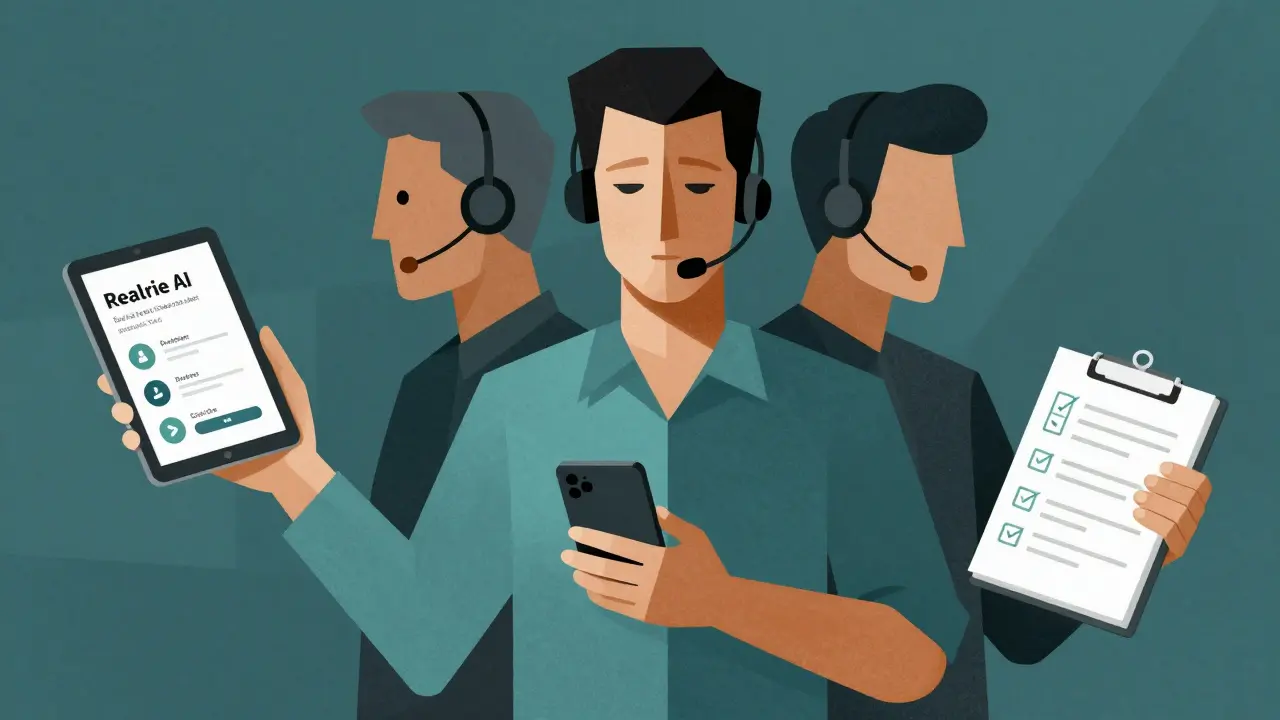
Generative AI vs. old-school tools: Why the difference matters
Old chatbots? They’re like vending machines. You press 1 for billing, 2 for tech support. If your issue isn’t listed, you’re stuck. Generative AI is like a knowledgeable coworker who’s read every policy, knows every customer, and can improvise.
Rule-based systems resolve 20-30% of inquiries. Generative AI resolves 60-80%. Why? Because it understands nuance. A customer saying, “I’m tired of getting charged for something I didn’t sign up for,” isn’t asking for a billing code. They’re angry. The AI picks up on that, suggests a refund, and tells the agent to apologize - all in real time.
And it works across languages. A contact center in Toronto can use the same AI system to help Spanish, Mandarin, and French speakers without hiring dozens of new agents. That’s scalability without the cost.
The risks: Hallucinations, integration headaches, and voice mismatch
It’s not all smooth sailing. Early adopters ran into problems. Some AI systems made up answers - called “hallucinations.” MIT Sloan found that 8-12% of early AI responses contained incorrect info. That’s dangerous in finance or healthcare.
Another issue? Integration. If your CRM is from 2012 and the AI vendor says “we support Salesforce,” but your company uses a custom-built system, you’re in for a long, expensive setup. Forty-two percent of negative reviews on Capterra mention this.
And then there’s brand voice. One agent on Reddit said: “The AI suggests responses that don’t sound like us.” That’s fixable - but only if you train the AI on your own scripts, tone, and examples. Companies that built custom prompt libraries saw 32% faster adoption.
Who’s doing it right? Real-world ROI examples
- Cox Communications: Used AI to analyze call data and discovered customers weren’t calling about 5G - they were asking about promotions. Adjusted agent training. Revenue jumped 20%.
- MetLife: AI flagged emotional cues during calls. FCR rose 3.5%, CSAT up 13%. Agent burnout dropped because they had better tools.
- American Express: Deployed “agentic AI” that could complete multi-step tasks - like refunding a fee, updating a card, and sending a confirmation email - without human input. Handle time for complex billing issues dropped 34%.
These aren’t tech giants with unlimited budgets. They’re companies that focused on one problem - say, long call times - and used AI to solve it. Then they scaled.

How to start: A realistic roadmap
You don’t need to overhaul everything on day one. Start small.
- Pick one metric to improve: Handle time? FCR? CSAT?
- Choose one use case: Real-time agent assist? Auto-summarization? Self-service chatbot?
- Pilot with 10-20 agents for 4-6 weeks.
- Measure results. If handle time dropped 10%, you’re already ahead.
- Expand to 100 agents. Train supervisors on managing AI-assisted teams.
- Integrate with CRM. Add compliance checks for data privacy.
Successful rollouts take 8-12 weeks for basic features, 6-9 months for full enterprise use. Companies that invested in change management - training, feedback loops, agent input - saw adoption rates 2.3x faster.
What’s next? Agentic AI and multimodal systems
The next wave isn’t just helping agents - it’s acting on its own. Agentic AI can now complete full workflows: check a balance, issue a refund, update a record, send a confirmation - all without human approval. American Express is already using this for simple billing corrections.
By 2026, Gartner predicts 80% of contact center interactions will involve some form of AI assistance. That doesn’t mean humans are gone. It means they’re freed up for the hard stuff - handling angry customers, negotiating complex refunds, building relationships.
Google’s Contact Center AI, launching in late 2024, will analyze voice tone, speech speed, and even silence patterns to detect frustration before the customer even says it. That’s the future. And it’s closer than you think.
Frequently Asked Questions
How much does generative AI for contact centers cost?
Implementation costs vary by size and complexity. Small teams (under 100 agents) can start with cloud-based platforms for $50-$100 per agent per month. Enterprise systems with custom integrations range from $200,000 to $1 million upfront, plus ongoing maintenance. But ROI kicks in within 6-14 months - often faster for mid-sized centers. The average ROI is 250%, according to IDC and Microsoft.
Can generative AI replace human agents entirely?
No - and it shouldn’t. AI handles routine, repetitive tasks. Humans handle emotion, complexity, and exceptions. The best contact centers use AI to make agents more effective, not to replace them. Agents using AI report lower stress and higher job satisfaction because they’re no longer drowning in paperwork and lookup tasks.
What’s the biggest mistake companies make when implementing AI?
Trying to automate everything at once. The biggest failures happen when companies skip pilot testing, ignore agent feedback, or don’t train supervisors. AI isn’t magic - it needs tuning. Start with one clear goal, test with real users, and refine before scaling.
Does generative AI work for small contact centers?
Yes - and they often see faster ROI. Mid-sized centers (100-500 agents) achieve payback in 6-9 months, compared to 10-14 months for large enterprises. Smaller teams can start with affordable SaaS tools that require no IT overhaul. The key is focusing on one high-impact use case, like reducing after-call work or improving FCR.
How do you prevent AI from giving wrong answers?
Use guardrails. Limit AI to approved knowledge bases. Require human review for high-risk responses (like refunds or account changes). Train the AI only on your internal data - not public internet sources. And monitor output: top-performing teams audit 5-10% of AI-generated responses daily. Companies that do this cut hallucination rates to under 2%.
Is generative AI compliant with GDPR and CCPA?
It can be - but only if you design it that way. Seventy-eight percent of North American contact centers now add compliance layers: data anonymization, consent tracking, and audit logs. Choose vendors that offer built-in compliance features. Never let AI access sensitive data unless it’s encrypted and restricted to authorized use cases.
Final thought: AI isn’t about cutting costs - it’s about creating value
The real ROI of generative AI isn’t just in hours saved or calls resolved. It’s in customers who stay longer, spend more, and recommend you to others. It’s in agents who feel empowered, not overwhelmed. It’s in a contact center that stops being a cost center and becomes a growth engine. The technology is here. The data is clear. The question isn’t whether you should use it - it’s how fast you can start.
Aditya Singh Bisht
February 2, 2026 AT 15:54My team tried a pilot last year and handle time dropped 18%. We didn't even need to hire extra staff. The agents are happier, customers are calmer, and we're actually hitting our targets now. This isn't tech for tech's sake-it's tech that works.
Agni Saucedo Medel
February 3, 2026 AT 06:06Also, the auto-summarization? Game changer. I used to leave work with a headache from typing notes. Now I just nod and move on. 🙌
ANAND BHUSHAN
February 3, 2026 AT 19:39Indi s
February 5, 2026 AT 07:21Rohit Sen
February 5, 2026 AT 14:56Vimal Kumar
February 6, 2026 AT 05:26And yeah, the numbers don’t lie. Our FCR jumped 4%. That’s 120 fewer repeat calls a week. That’s not cost-cutting. That’s customer loyalty.
Amit Umarani
February 7, 2026 AT 04:33Noel Dhiraj
February 8, 2026 AT 07:56vidhi patel
February 9, 2026 AT 06:06Priti Yadav
February 11, 2026 AT 00:10